
Paper Tigers Is a Riveting, If Uneven, Showcase for Three of Hollywood's Best
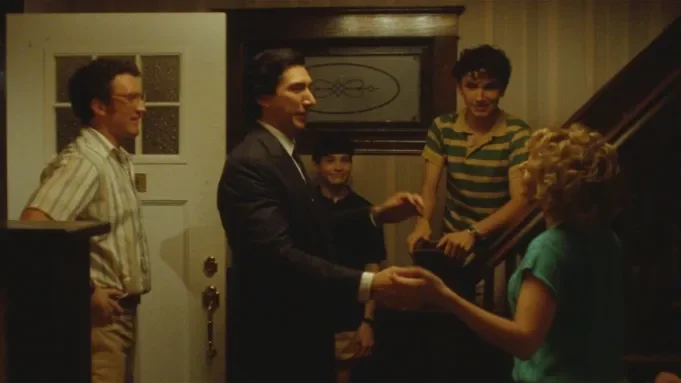
There is a particular kind of film that lives and dies by the weight its cast can carry — one where the script occasionally stumbles but the performers refuse to let it fall. Paper Tigers, which made its world premiere at the 79th Cannes Film Festival, is exactly that kind of movie. It is flawed, occasionally meandering, and at times unsure of what it wants to say. But when Scarlett Johansson, Adam Driver, and Miles Teller are in a room together, none of that seems to matter. You are simply riveted.
The film opens with a quiet confidence that suggests it knows exactly where it is going. The director's command of atmosphere is immediate—cigarette smoke curling in dim light, city streets that feel watched, and dialogue that cuts sideways rather than straight. The world of Paper Tigers is one built on leverage, loyalty, and the cost of both. It is a thriller that wears the costume of a character study, and for long stretches, the layering works beautifully.
Johansson delivers what is arguably one of the most controlled and commanding performances of her career. Playing a woman navigating a world designed to keep her on the outside, she does extraordinary work in the spaces between her lines. Her silences say more than most actors' monologues. There is a specific scene—midway through the second act—where she receives news she has clearly been dreading for years, and the way she holds that moment, still and open, is the kind of acting that earns standing ovations on the Croisette. She is electric without ever being showy, and it is precisely the calibration this role demands.
Adam Driver, meanwhile, continues to prove that he is one of the most chameleonic actors working today. His character operates in moral gray areas with an ease that is both unsettling and deeply compelling. Driver never telegraphs where his loyalties lie, and that ambiguity is the film's greatest asset in its first half. He and Johansson share a chemistry that crackles precisely because it is rooted in distrust — two people who need each other and know better than to say so.
Then there is Miles Teller. If Johansson and Driver are the film's architecture, Teller is its live wire. His scenes opposite members of the Russian mob are the sequences that will stick with audiences long after the credits roll. There is a particular confrontation in the third act—low-lit, close-quartered, tension drawn so tight you forget to breathe—where Teller is simply extraordinary. He plays fear and defiance simultaneously, with a physicality that feels completely authentic. The Russian mob dynamic gives the film its most propulsive energy, and Teller meets every moment of that danger with full commitment.
Where Paper Tigers loses some of its footing is in the connective tissue. The second half of the plot drags, with detours that feel more compulsory than necessary. A subplot involving a secondary character overstays its welcome, and there are tonal shifts that pull the film in directions it hasn't quite earned. The screenplay trusts its leads more than it trusts its plot, and while that instinct isn't wrong, it leaves the narrative feeling slightly incomplete at the seams.
Still, Paper Tigers is well worth your time. It is proof that performance can be its own form of storytelling—that the right actors in the right material, even imperfect material, can make you feel seen, unsettled, and fully alive in a darkened theater. Johansson, Driver, and Teller don't just elevate this film. They rescue it, repeatedly, and with considerable style.
Paper Tigers is one of the few American films selected to compete for the Palm d’or at the festival. Neon holds the US distribution for the film and plans to release it in the fall.