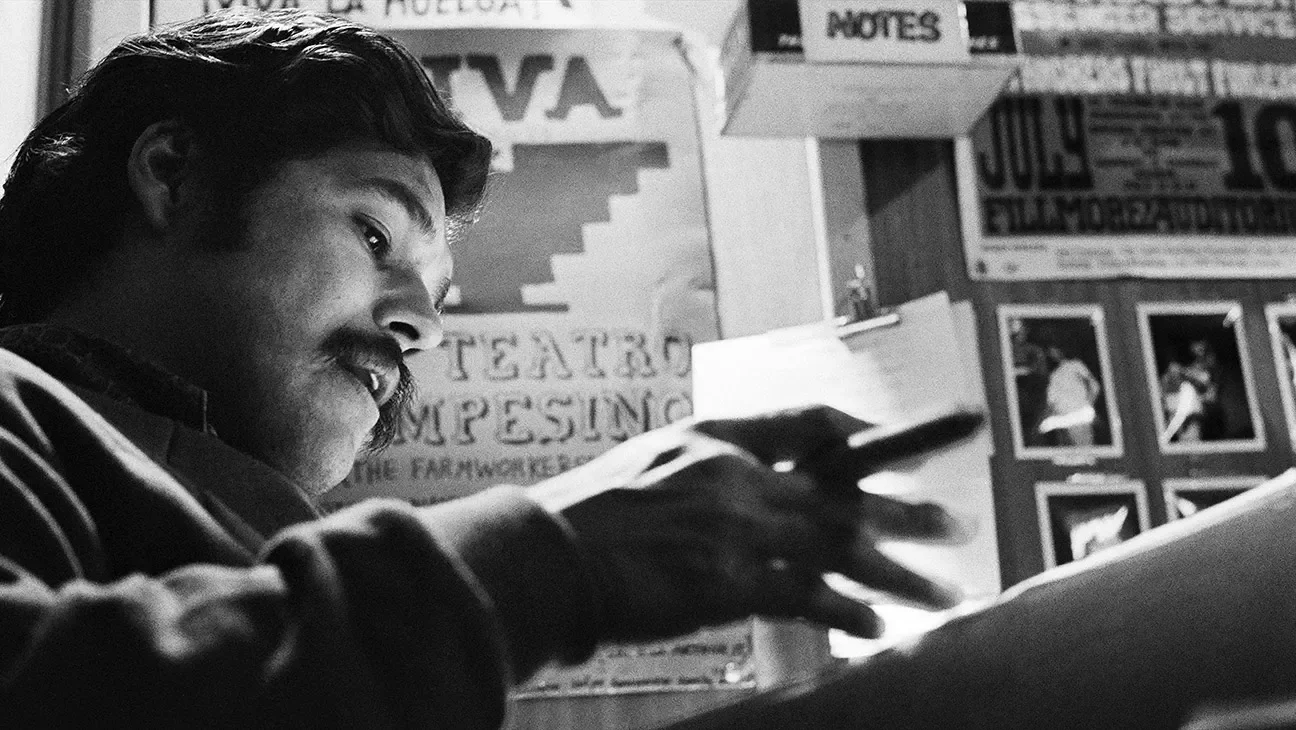
American Pachuco: The Legend of Luis Valdez—A Visionary Ahead of His Time
by Kathia Woods
Luis Valdez didn't wait for Hollywood to open its doors. He kicked them down, built his own theater in the fields, and created a blueprint for Latinx storytelling that the industry still struggles to follow more than five decades later.
"American Pachuco The Legend of Luis Valdez" is more than just the story of one man's journey from the picket lines of farmworkers to Broadway and Hollywood. It's a lesson in what happens when a pioneer won't change his mind, even when the people in charge don't know what to do with him.
Valdez started El Teatro Campesino in 1965. It turned flatbed trucks into stages and the lives of migrant farmworkers into revolutionary art. Valdez was writing real Chicano stories that showed how human, entertaining, and complicated his community was, while Hollywood was still casting white actors in brownface. He knew something that the industry is just starting to figure out: Latino stories aren't just for a small group of people; they're for everyone. His actors, which were short, funny plays he put on in the fields, were more than just fun. They were a mix of political activism, keeping culture alive, and new types of art.
The documentary follows Valdez's journey from being a radical in street theater to becoming a well-known playwright and filmmaker. It never loses sight of what made his work revolutionary: his unwavering commitment to telling Chicano stories on his terms. We see how Valdez made his way through a world that didn't have a framework for his work by using old footage and new interviews. He built institutions and opportunities where none existed.
The movie effectively shows how Valdez's 1978 Broadway debut in "Zoot Suit" should have marked a turning point for Latinx theater.
Instead, it became a case study in Hollywood's perpetual failure to market Latino art. Despite critical acclaim and a passionate audience that packed the Mark Taper Forum in Los Angeles for an unprecedented run, Broadway producers and marketers couldn't figure out how to sell a Chicano story to mainstream America. The problems that the show has are similar to what Latino creators go through today: their work is put in "specialty" categories, marketed only to Latino audiences, or watered down to make it more appealing to white people. The marketing machinery that effortlessly sells white stories to everyone simply malfunctions when faced with Latino narratives, as if our experiences couldn't possibly resonate beyond our communities.
What makes this documentary particularly resonant is how little has changed.
In the 1970s and 1980s, Valdez was ahead of the curve. He made movies like "La Bamba" that showed that Latino stories could be giant hits with the right support. The 1987 Ritchie Valens biopic became a giant hit, but Hollywood saw it as an exception instead of a model. In 2026, we are still fighting for proper representation. We are still watching studios mess up Latino releases because they don't have enough money for marketing and their distribution strategies are too narrow. We still have to prove that our stories matter to people beyond demographic checkboxes.
The movie doesn't hide the problems and sacrifices Valdez had to make, but it also honors his lifelong commitment to being real.
He didn't dilute his vision to make executives comfortable. He insisted on Spanish dialogue when advisors told him it would limit his audience.
When the industry wanted to see familiar white faces, he cast Latino actors. He made room where there was none before, and he inspired generations of Latino filmmakers, from Gregory Nava to Robert Rodriguez to more recent voices like Cristina Costantini, to do the same.
David Alvarado's directing style pays tribute to Valdez's theatrical roots by using visual elements that are similar to the bold, stylized look of El Teatro Campesino. At the same time, the story is based on personal accounts from people who saw his work firsthand.
"American Pachuco The Legend of Luis Valdez"" is a must-see not only to learn about Valdez's legacy, but also to see how his fights are still going on today. Every Latino artist who fights for creative control, insists on authentic casting, and won't explain their culture through a white lens is following the path Valdez carved with determination and skill.
Luis Valdez's story isn't just about the past. It's a plan for the revolution that is still going on.