Ken Burns' "The American Revolution" Grapples With Fractured National Memory
by Kathia Woods
In November, nine years after its initial production, Ken Burns returned to PBS with "The American Revolution," a six-part, twelve-hour documentary. It was released in time for America's 250th anniversary. Sarah Botstein and David Schmidt co-directed the series. It comes at a time when there is no longer a clear agreement about the founding of the country and different stories are competing for attention. The result is both Burns' most ambitious historical work and his most ideologically unclear. It is a stunningly crafted piece of art that fails to explain what the Revolution meant in the end.
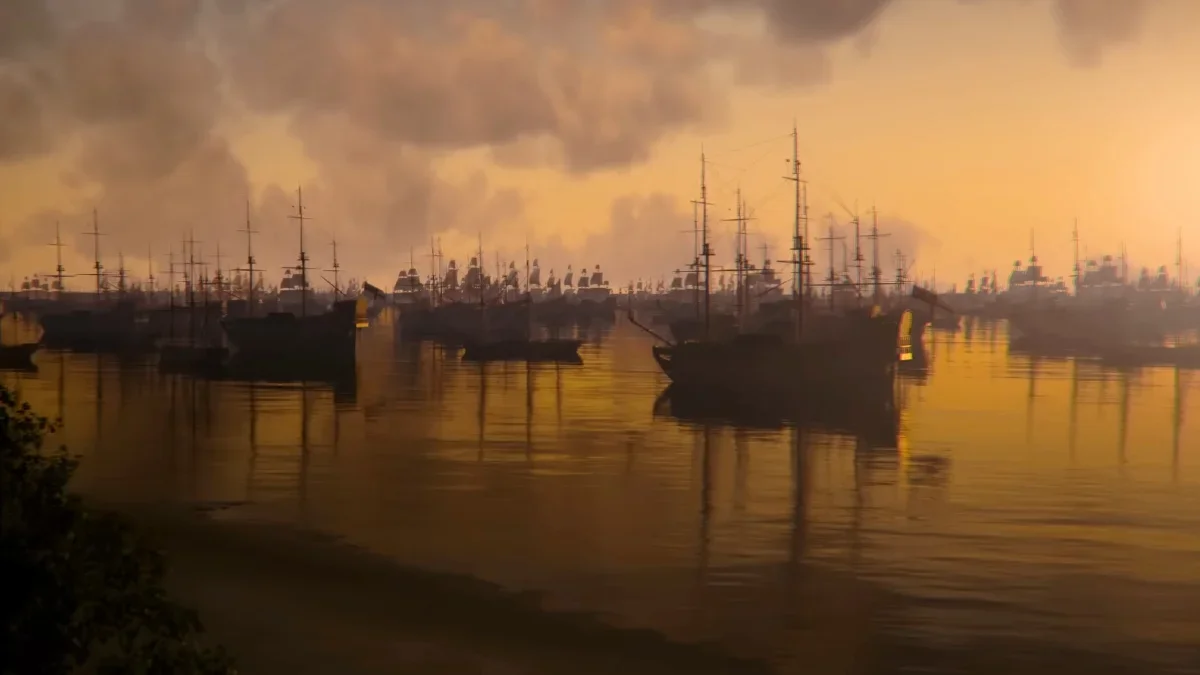
The documentary's technical skill is still beyond question. Burns uses his signature style—slow pans across period paintings, live-action recreations of battlefields, and beautiful landscape cinematography—very well. From 1754 to 1789, there are twelve hours of vocal talent, including Tom Hanks, Meryl Streep, Samuel L. Jackson, and Paul Giamatti, who all reprise their roles as John Adams seventeen years after HBO's miniseries. The long runtime is worth it because of the high production values, like the beautifully animated battle scenes that finally make sense of those confusing textbook maps.
The structural ambition of "The American Revolution" sets it apart from Burns' earlier work. Instead of telling one clear story, the series tells three stories at the same time: the traditional military campaign for independence, the fight for freedom by enslaved people (often against the Patriots), and the fight for sovereignty by Native Americans against colonial expansion. This multiperspectivity demonstrates Burns' attempt to elevate voices often overlooked, all the while honoring founding fathers such as Washington and Jefferson.
The series excels when depicting war's brutal realities. Burns captures the lice-infested camps, frostbitten soldiers, and catastrophic casualties with unflinching detail, grounding revolutionary mythology in visceral human suffering. His portrait of George Washington emphasizes the general's near-miraculous ability to maintain a fragmenting Continental Army through endless defeats and deprivation before seizing victory at precisely the decisive moment. The coverage of lesser-known figures—Loyalists, women who disguised themselves as soldiers, and free and enslaved Black Americans navigating impossible choices—enriches our understanding beyond the "smart guys in Philadelphia thinking really good thoughts" version taught in schools.
But this ecumenical approach makes the story very difficult to follow. Burns wants to inspire patriotic reverence, but he also wants to acknowledge how the Revolution hurt enslaved people and Indigenous nations. He honors the ideals of the people who started the country while also writing about how those same people betrayed them. The beginning of the last episode of the documentary is a perfect example of this confusion: historian Jane Kamensky makes vague statements about "believing in possibility" that don't really mean anything. The narrator says, "The world would never be the same" after Yorktown. The next forty minutes show how peace made things worse for Native Americans and enslaved people.
The most obvious problem with the series is that it doesn't go into enough detail about the political aspects of the Revolution. Burns shortchanges the intellectual and institutional innovations that set the American Revolution apart from other colonial rebellions by focusing almost entirely on military history, with one battle after another in a sometimes numbing succession. The last fifteen minutes only briefly mention the radical idea of popular sovereignty, the fragile constitutional balance between freedom and order, and the unprecedented democratic experiment that emerged from this violence.
This emphasis reveals Burns caught between incompatible imperatives. He wants to honor the Declaration's assertion that all men are created equal while acknowledging Jefferson owned slaves. He wants to celebrate constitutional ideals while recognizing how the founders excluded most people from those protections. The documentary resolves this tension by simply refusing to resolve it, toggling between celebration and critique without articulating a coherent position on what Americans should take from their revolutionary heritage.
The result feels like historical coverage made for a culture war cease-fire that never happened. Burns started making the show in 2015 with the goal of giving a unified audience a history that everyone could agree on. That agreement is no longer there ten years later. Conservatives will be angry that slavery and the loss of land to Indigenous people are getting so much attention. Progressives will ask why we should look up to founders who didn't live up to their values. Burns doesn't please either side because he won't take a side on the most important question: Do Americans move forward by the light of founding ideals, or do we need to move beyond those ideals because they were products of their time?
Even though it has some conceptual flaws, "The American Revolution" is still a must-see. Its 96% Rotten Tomatoes score and record viewership for a PBS show prove that Americans are keen to learn more about their roots and that the show was well-made. The educational materials, nationwide tour, and 600-page companion book that come with it show that Burns is still having an impact on how Americans think about their past. The series gives viewers who are willing to deal with its contradictions a lot of useful information about how the founding generation dealt with giant changes.
Burns has made a beautiful, well-researched documentary, but it still can't answer the main question: What was the American Revolution for? That failure might not be Burns' fault as much as it is America's. It shows how the story of the country's origins has broken down in a time of ideological polarization. As we near 250 years since the Revolution, people still disagree about what it meant. Burns' refusal to take sides gives viewers outstanding craft that serves the story's ambiguity, which may be the only honest way to do it.
The series is currently streaming on PBS