Harlan Coben’s Run Away Review: A Masterclass in Narrative Misdirection
by Kathia Woods
*****Spoiler Alert*****
Netflix's newest adaptation of Harlan Coben's work comes as a New Year's gift full of secrets, lies, and shocking truths. "Run Away" gives fans exactly what they expect from the master of mystery, and then some. It takes the twisty thriller to dizzying new heights that will make you question everything you thought you knew.
The eight-episode show is about Simon Greene, a desperate father who is looking for his teenage daughter Paige after seeing her busking in a park. Simon becomes the main suspect after the death of his abusive boyfriend, Aaron. This starts a frantic investigation that leads to places that are much darker and more complicated than anyone could have imagined.
What makes "Run Away" so great is how it uses what the audience thinks against them. The show's complicated plot twists don't seem fake or cheap; they're like carefully arranged dominoes that fall in a way that is very precise. Just when you think you've solved the mystery, Coben pulls the rug out from under you, showing that there are layers upon layers of lies that change the meaning of everything that came before.
The genius is going the wrong way. While we watch Simon desperately look for Paige, we learn that she was safe in rehab the whole time, secretly put there by her mother, Ingrid, before any of the trouble started. It's a brilliant bait-and-switch that changes Simon's quest from heroic to tragicomic, making his investigation both useless and absolutely necessary.
The main murder mystery keeps viewers on the edge of their seats. Several people seem to be guilty of killing Aaron: Simon himself, who is shown beating Aaron in public in a viral video; daughter Paige, who had every reason to want him dead; and neighbor Cornelius, who admits to it to protect others. The show skillfully plays with these ideas, making it seem like suspicion is shifting like quicksand under our feet.
The fact that Ingrid killed Aaron is awful, but it's only the beginning. The Shining Haven cult and its plan to get rid of Casper's illegitimate sons turn a domestic thriller into something much worse. Aaron's death is suddenly linked to a string of murders carried out by hitmen Ash and Dee Dee, who have been killing half-brothers one by one to protect the inheritance of Casper's "divine" sons.
These narrative threads seamlessly intertwine. Private investigator Elena’s seemingly separate case hunting for missing boy Henry connects directly to the cult’s adoption agency scheme. Her tragic death in episode six—lured to a remote cabin under false pretenses—demonstrates the show’s willingness to eliminate major characters mid-investigation, raising the stakes considerably.
The show’s most devastating twist arrives in its final moments. The revelation that Paige and Aaron weren’t lovers but half-siblings—both born from The Shining Haven—and that Ingrid unknowingly murdered her son transforms the entire narrative into a Greek tragedy. It’s a gut-punch that reframes every interaction between these characters with heartbreaking irony. Aaron’s manipulation of Paige with drugs wasn’t purely abuse—it was a desperate, twisted attempt to keep his newly discovered sister close.
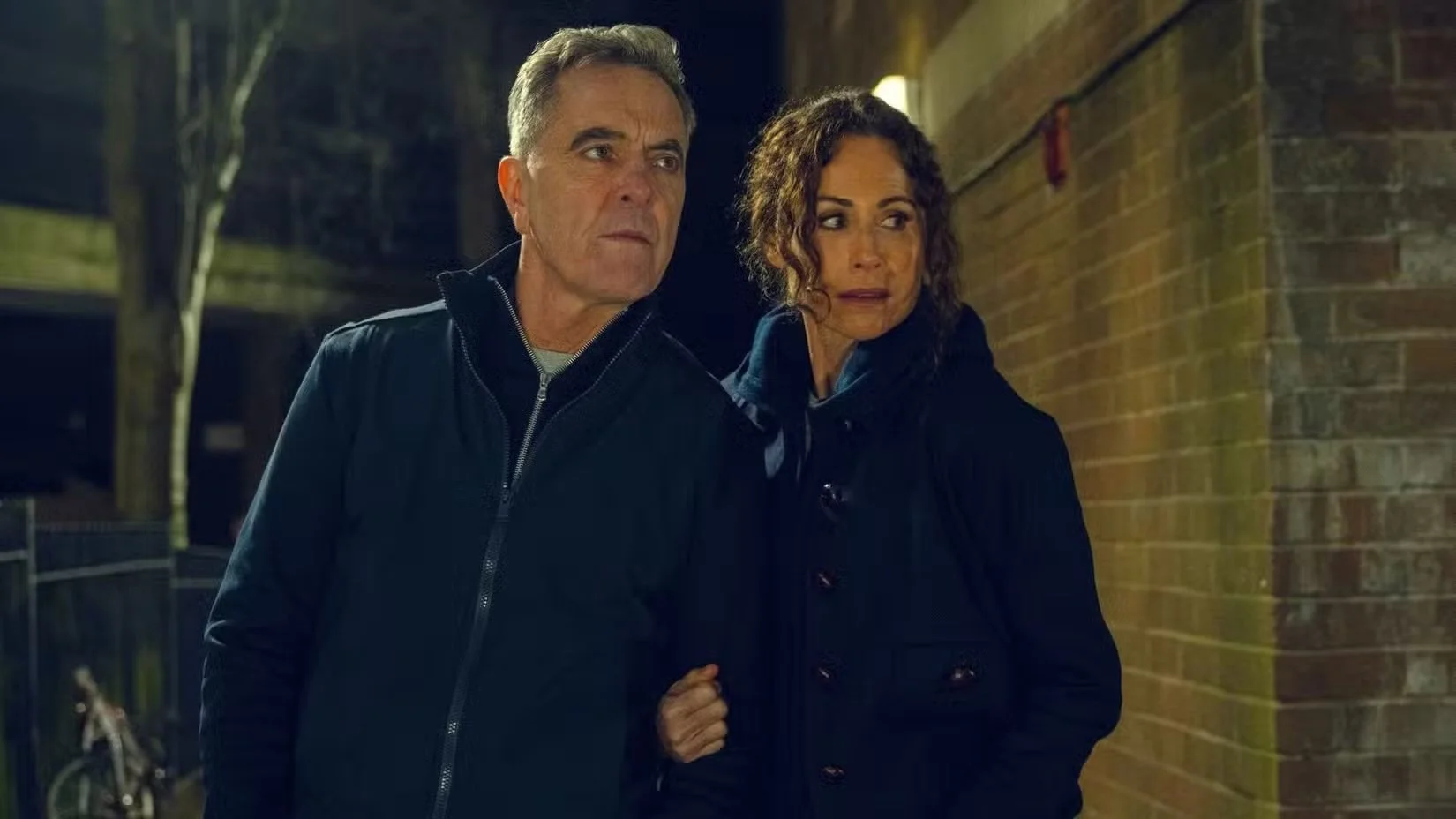
James Nesbitt gives a powerful performance as Simon, showing both the fierce determination of a father and the growing panic of a man who is losing control of his life. Minnie Driver plays Ingrid, a woman with secrets that could ruin everything she's built. She brings quiet destruction to the role. The supporting cast, especially Ruth Jones as Elena and Alfred Enoch as Detective Fagbenle, keep the plot from getting too crazy by making it clear that the characters are real people with real feelings.
"Run Away" stands out from other thrillers because it is willing to be silly while still being emotionally real. The shootout on the housing estate that kills many people feels both over-the-top and deserved. It should seem like a godsend that Mother Ardonia shows up at just the right time to push Dee Dee off a balcony, but the show has rules that allow for such dramatic events.
The pacing occasionally suffers under the weight of its ambitious plotting. Some B-plots—particularly involving Simon’s other children and Paige’s university friends—feel undercooked compared to the central mysteries. Elena’s personal investigation into her husband’s secret child, while emotionally resonant, sometimes distracts from the main narrative thrust.
Yet these minor quibbles fade against the show’s commitment to keeping viewers perpetually disoriented. Just when you think you’ve anticipated the next twist, “Run Away” zigs when you expect it to zag. The cult conspiracy could have felt ridiculous; instead, it’s woven so thoroughly into the fabric of the story that it feels inevitable in retrospect.
"Run Away" is Harlan Coben at his most daring. It's a thriller that knows how to balance what makes sense with what makes a good story. The show trusts its viewers to follow more and more complicated threads while giving them emotional payoffs that go beyond the plot. The last scene, in which Simon learns the truth about Ingrid's past and what she really did, stays with you long after the credits roll. It's a haunting reminder that sometimes the answers we seek hurt us more than the questions ever could. This masterful story makes you think deeply about what truth is and the weight it carries. As viewers try to understand what Simon has said, they are left thinking about the moral complexities of love and loyalty and how far someone might go to protect someone they care about.
"Run Away" is a masterclass in keeping you on the edge of your seat and leading you in the wrong direction with its twisted logic and increasingly strange revelations. It keeps you guessing until the very end, when it is devastating.
All Eight Episodes are currently streaming on Netflix.