Soul Patrol' A Necessary Reckoning With Hidden History Arrives at the Perfect Moment
by Kathia Woods
J.M. Harper's Sundance-winning documentary resurrects the story of Vietnam's first Black special operations unit—a story America tried to bury.
There's a haunting moment early in J.M. Harper's "Soul Patrol" when Ed Emanuel recalls boarding his first-ever airplane, headed to Vietnam, only to hear the captain announce Bobby Kennedy's assassination over the PA system. The gut-punch irony crystallizes immediately: Black teenagers are flying toward a war 8,000 miles away while the fight for their own civil rights explodes at home. The result is the brutal duality that defines Harper's extraordinarily timely documentary, which just won the Directing Award for U.S. Documentary at the 2026 Sundance Film Festival.
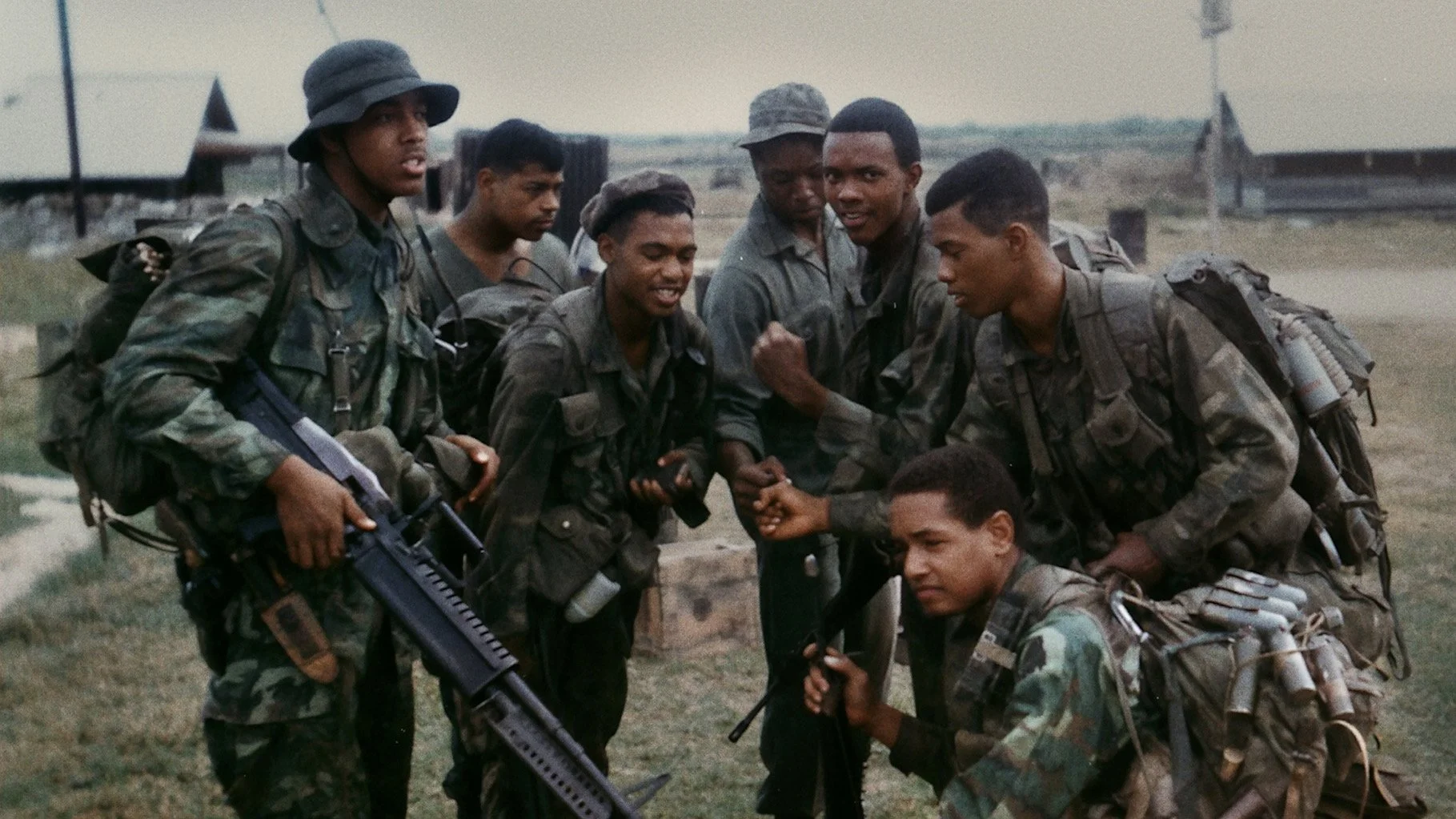
At a moment when book bans proliferate, when curriculum battles rage over teaching accurate American history, when entire state legislatures work overtime to legislate Black history out of classrooms, "Soul Patrol" arrives not just as cinema but as defiant testimony. Harper has excavated a chapter of American military history that was deliberately erased—the story of Company F, 51st Infantry's Long Range Reconnaissance Patrol (LRRP), the Vietnam War's first all-Black special operations unit. These weren't just soldiers; they were teenagers—some as young as 17—sent on suicide missions deep behind enemy lines while their country systematically devalued their lives both abroad and at home.
Based on Emanuel's 2003 memoir of the same name, the film reunites the surviving members of this six-man unit 57 years after they first deployed. What emerges is a masterclass in documentary storytelling that weaves together intimate present-day interviews, raw Super 8 footage shot by the soldiers themselves, and what Harper sensitively calls "adaptations"—stylized reenactments that capture emotional truths these men are still processing. In one striking sequence, Emanuel navigates a grocery store while soldiers in full combat gear patrol the aisles around him—a visual metaphor for how war's ghosts never really leave.
The film's power lies in its refusal to sanitize. We hear Lawton Mackey Jr., who forged his mother's signature at 17 to escape $3-a-day field labor in South Carolina, articulate the immediate regret that hit once he understood what he'd signed up for. We listen as Thad Givens and the other survivors recount not just the terror of combat but the specific betrayals of fighting for a country that denied them basic dignity. "The white soldiers don't like you any more than the enemies," one veteran remembers. Decades later, the racist "compliment" of white soldiers calling them the "Soul Patrol" still stings.
Harper's filmmaking combines rigor and emotional generosity. Journalist Jesse Lewis, who appears in the documentary, recounts the systematic erasure of Black soldiers from media coverage despite Black men comprising 23% of troops and suffering disproportionate casualties. The film contextualizes this erasure within 1968's explosive civil rights battles, the assassinations, and the violence, creating an unbearable portrait of young Black men asked to die for freedoms they were denied. Some of these veterans hid their service for decades, too ashamed or too traumatized to speak.
What makes "Soul Patrol" essential viewing right now is that it exposes the very mechanics of historical erasure that continue today. Emanuel states plainly, "I knew that they were going to erase us from history." His memoir, and now this film, exist as insurance policies against that erasure. Harper himself acknowledges the existential urgency: "Black stories are important now more than ever because it's an existential crisis. I observe this urgency not only in the telling of this story but also in how documentaries are financed.
The documentary also makes space for the families—wives and partners who share the toll of living with men still fighting internal wars five decades later. This expansion of perspective adds a crucial dimension, reminding us that trauma echoes across generations and that the cost of war extends far beyond battlefields.
At 100 minutes, Harper packs in dense material—archival news footage, family reunions, and testimony that ranges from battlefield horrors to the mundane humiliations of returning to a racist America. The editing occasionally threatens overload but mostly maintains careful balance. The film closes with the Blind Boys of Alabama's "I Shall Not Walk Alone," a spiritual that lands with devastating grace.
"Soul Patrol" arrives in an America where certain forces would prefer these stories remain untold, where acknowledging the full complexity of American history is positioned as divisive rather than truthful. Harper's documentary is an act of preservation and resistance. It insists that these men's sacrifice, their courage, and their betrayal by the country they served must be witnessed and remembered.
The footage isn't comfortable viewing. It shouldn't be. These soul brothers fought two wars—one in the jungles of Vietnam and one in the streets of America—and lost parts of themselves in both. The least we can do is bear witness to their testimony while they're still here to give it. Two members of the unit died during filming, their stories now preserved only through Harper's cameras.
"Soul Patrol" proves that reclaiming erased history isn't academic—it's urgent, necessary work. In an era when saying "Black lives matter" is controversial, when teaching about Tulsa or Emmett Till sparks legislative panic, this documentary stands as incontrovertible proof: they tried to erase us from history, but here we are. I'm still standing. I'm still telling the truth.
"Soul Patrol" premiered at the 2026 Sundance Film Festival, where it won the Directing Award: U.S. Documentary. Distribution details have yet to be announced.