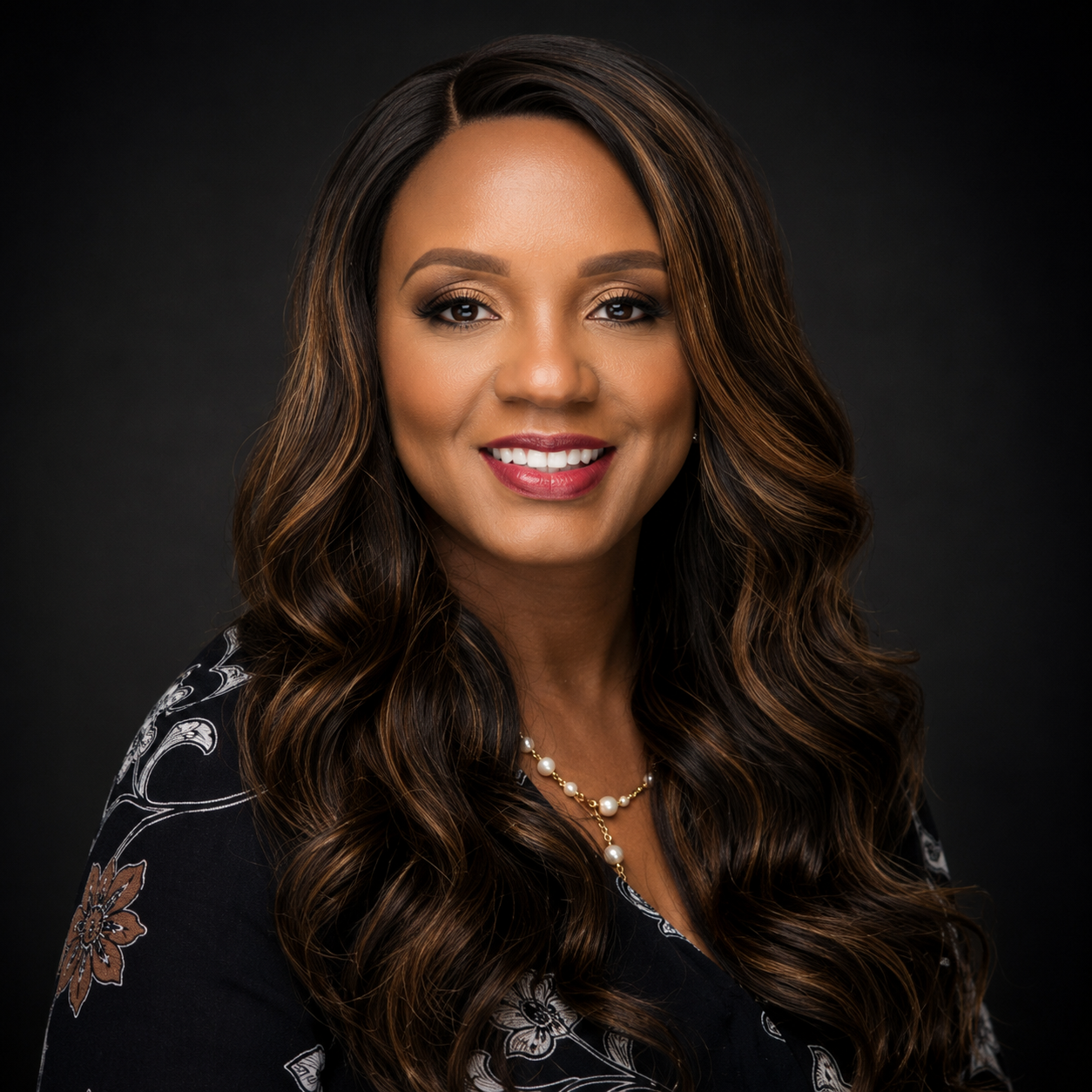
Finally Getting Her Flowers:Teyana Taylor's Golden Globe Win Is More Than a Trophy
When Jennifer Garner and Amanda Seyfried called Teyana Taylor's name as the first Golden Globe winner of the night, something broke open. Not just for Taylor, who stood trembling in a daring custom Schiaparelli gown, tears streaming down her face. But for every Black woman artist who has ever been told they were too much, too bold, too confident—too everything except what Hollywood wanted them to be.
This wasn't supposed to happen. Amy Madigan, fresh off Critics Choice and New York Film Critics Circle wins for Weapons, was the presumed frontrunner. Industry insiders had already written the narrative. But Teyana Taylor—singer, dancer, choreographer, director, mother, and now Golden Globe-winning actress—had other plans.
'Oh my God. Oh my God. Wait until you see my party in the back!' Taylor exclaimed, referencing her gown's dramatic backless design. It was quintessentially Teyana—confident, playful, unapologetically herself. Then came the vulnerability. 'I almost didn't even write a speech because I didn't think I would get this.' That admission, delivered through tears and visible shaking, revealed the truth: even now, even after two decades of excellence, she still doesn't fully believe the industry will recognize her.
But they did. And it matters more than you might think.
The Long Road to Recognition
Let's be clear about who Teyana Taylor is. At 15, she choreographed Beyoncé's 'Ring the Alarm' video. At 15. She signed to Pharrell Williams' Star Trak Entertainment while still a teenager, collaborated with Kanye West on My Beautiful Dark Twisted Fantasy, and went on to release critically acclaimed albums that the industry consistently ignored. Her 2014 debut VII? Slept on. Her 2018 album K.T.S.E., produced entirely by Kanye? Undervalued. Her 2020 masterwork The Album? So overlooked that she announced her retirement from music, citing feeling 'super under-appreciated as an artist, receiving little to no real push from the machine.'
In 2020, despite amassing 162.8 million Spotify streams and 15.2 million listeners across 92 countries, Taylor wrote on Instagram: 'I ain't gone front in times of feeling super under appreciated as a artist... constantly getting the shorter end of the stick, being overlooked, I mean the list on and on lol.' She was done. Finished. Walking away from an industry that refused to see her genius while everyone else—her fans, her peers, other artists—recognized it immediately.
But here's what the industry didn't understand: Teyana Taylor doesn't need anyone's permission to be great. She's a director (winning BET's Video Director of the Year in 2020 and 2023 under the name 'Spike Tee'), a fashion designer (her Adidas Harlem GLC sneakers hold the record for fastest-selling sneakers in Adidas Originals history), a choreographer whose work has been referenced by Janet Jackson, and a creative visionary who operates on a level most people can't comprehend.
So when music wouldn't give her flowers, she went to film. And film? Film had no choice but to pay attention.
The Breakthrough That Changed Everything
In 2023, A.V. Rockwell's A Thousand and One premiered at Sundance Film Festival and won the Grand Jury Prize. Taylor's performance as Inez de la Paz—a hairdresser fresh out of prison who kidnaps her son from foster care to give him a better life—was nothing short of revelatory. Critics struggled to find adequate language to describe what she'd accomplished.
Taylor embodied a character who was simultaneously a confounding and sympathetic figure: a legally grown woman who was emotionally little more than an adolescent, watching her share candy and bodega snacks with her son while playing with Power Rangers toys. You rooted for her to grow into motherhood despite how self-defeating and combative she was. When asked why she had no family, Taylor didn't have to say more than 'I lost them' for audiences to understand it was to the crack epidemic.
The National Board of Review gave her their Breakthrough Performance Award. She was nominated for Gotham and Independent Spirit Awards. The film grossed $3.5 million and was named one of the top ten independent films of 2023. And yet—and this is crucial—she was not nominated for an Oscar.
Taylor tweeted simply: 'Manifesting' with prayer hands and fingers crossed emojis. Her fans rallied: 'Oh if Teyana Doesn't get an Oscar this year because BABY!!! She definitely deserves one!! But yeah if she doesn't get it..might just be my super villain origin story.' The Academy, as is often the case with Black women, looked elsewhere.
But Paul Thomas Anderson was watching.
One Battle After Another: The Role That Sealed Her Legacy
When Anderson cast Taylor as Perfidia Beverly Hills in One Battle After Another, he knew exactly what he was doing. This wasn't a supporting role in the traditional sense—this was a character who would anchor the film's emotional core while sharing the screen with Leonardo DiCaprio, Sean Penn, and Benicio Del Toro. Perfidia is a French 75 member, a revolutionary, a mother dealing with postpartum depression, a woman navigating her identity and sexuality in a time of political upheaval.
In a 2025 interview with Elle magazine, Taylor described the challenge: 'Especially as a woman, we're told we're too confident, we got to tone it down. Here we see this woman. It's like No, you won't quiet me. You won't set me down. I won't play house with you.' Perfidia, like Taylor herself, refuses to be diminished.
Taylor said portraying the character's complexities was both challenging and necessary to spark dialogue about identity, motherhood, and resistance. And she succeeded spectacularly. One Battle After Another became the most nominated film at the 2026 Golden Globes with nine nods, winning four trophies total: Best Musical/Comedy, Best Director, Best Screenplay, and Best Supporting Actress for Taylor.
The Speech That Broke Hearts and Barriers
After the initial shock and self-deprecating humor, Taylor's acceptance speech became a masterclass in grace, gratitude, and truth-telling. She shouted out her daughters upstairs in the Beverly Hilton: 'My babies are upstairs watching, y'all better be off them damn phones and watching me right now!' The crowd roared. Even in her most vulnerable moment, she remained a mother first.
She thanked God 'for every part of this faith walk—every lesson, every test, and every blessing.' She acknowledged the Golden Globe voters 'for seeing me and reminding me that purpose always finds its moment.' She thanked her parents, her tribe, and 'Paul Let Him Cook Thomas Anderson' for his 'vision, trust and brilliance.'
But it was the conclusion that will echo through eternity:
'Lastly, but most importantly, to my brown sisters and little brown girls watching tonight—our softness is not a liability. Our depth is not too much. Our light does not need permission to shine. We belong in every room we walk into, our voices matter, and our dreams deserve space.'
The ballroom erupted. Julia Roberts, whom Taylor had mentioned hoping to meet, gave her a standing ovation. Leonardo DiCaprio applauded. The entire industry, for once, was forced to acknowledge what everyone else had known for years: Teyana Taylor is a once-in-a-generation talent.
The Comeback, The Grammy, The Vindication
In August 2025, five years after announcing her retirement, Taylor returned to music with Escape Room, a 22-track visual album that marked a creative rebirth. The album featured production from Rico Love, The Runners, Kaytranada, Freaky Rob, and Derrick Milano, with narrated interludes from Issa Rae, Jill Scott, Taraji P. Henson, Jodie Turner-Smith, Kerry Washington, La La Anthony, Niecy Nash, Regina King, and Sarah Paulson. It was accompanied by a 38-minute short film co-starring Aaron Pierre and LaKeith Stanfield.
The album earned her first-ever Grammy nomination for Best R&B Album—a milestone she views as recognition for every album she's released: VII, K.T.S.E., The Album, and now Escape Room. 'This acknowledgement for me is for every album that I put out that I felt like was underrated or not seen,' she told People magazine. 'All I ever wanted was to feel appreciated, and I wanted to feel utilised. I didn't want to be stuck or put into one box.'
She described the twin nominations—Grammy and Golden Globe—as 'one answered prayer after another.' She added: 'I think what lured me back was just me coming back on my terms.' And that's the key: on her terms. No longer waiting for the machine's permission, no longer accepting being shelved or underused.
In a conversation with Deadline's Take Ten, Taylor reflected on her 2020 retirement announcement: 'I remember going live… saying that I was retiring, and that I wanted more for myself, and I wanted to pour into other avenues, and I wanted to open other boxes. It's so crazy because taking that leap of faith and taking that faith walk changed my whole life, like I don't know if I would be Perfidia today had I not taken that leap. If I stayed stagnant in being shelved or underused or just stayed put in one box, I would have never known how many other doors [would] open for me.'
What This Win Represents
Teyana Taylor's Golden Globe win is about more than a single performance, no matter how spectacular. It's about an entire career spent proving herself, about being excellent in every medium she touches, and about an industry that consistently failed to meet her at the level of her talent until she left them no choice.
It's about Black women in entertainment who are told to shrink themselves, to be less confident, to take up less space—and who refuse. It's about the unique tax placed on Black women artists: that they must be ten times better to get half the recognition, and even then, the recognition might never come.
Consider the path she took. Music didn't value her, so she excelled at directing. Fashion underestimated her, so she broke sales records. Choreography? She did work that made Janet Jackson take notice. And when acting finally gave her a platform, she delivered performances so undeniable that even the notoriously conservative awards bodies had to acknowledge her.
This is what it takes. This is what Black women must do to receive the flowers they've deserved all along. And even then—even with a Sundance Grand Jury Prize, a National Board of Review Breakthrough Performance Award, Critics Choice recognition, and now a Golden Globe—she's still fighting for her place.
The Oscar Question and What Comes Next
Oscar nominations will be announced January 22, 2026. Industry prognosticators have Taylor firmly in the conversation for Best Supporting Actress, though she faces stiff competition from Ariana Grande (Wicked: For Good) and Isabella Rossellini (Conclave). Some are questioning whether the surprise Golden Globe win positions her as a frontrunner or if it was a fluke, a feel-good moment that the more conservative Academy will overlook.
But here's what they're missing: Teyana Taylor has already won. Not the Oscar—though she deserves that too—but something more important. She proved that the industry's opinion of her worth was never the metric that mattered. Her fans knew. Her peers knew. She knew. And now, finally, reluctantly, the establishment knows too.
Taylor is already preparing for her next chapter: directing her first feature film, Get Lite, starring Storm Reid for Paramount Pictures. She's starring opposite Matt Damon and Ben Affleck in Netflix's crime thriller The Rip. She appeared in Ryan Murphy's Hulu legal drama All's Fair. She released Tyler Perry's Straw on Netflix. And she's just been honored with the Vanguard Spotlight Award from the Costume Designers Guild, recognizing her as a performing artist who sets new standards not only for outstanding achievements but for courage as a visionary.
Despite all this—despite the accolades, the projects, the recognition—Taylor remains grounded. 'I try and focus on what's directly in front of me, and then everything else will fall into place,' she told People. She views patience not as punishment but as preparation. 'Of course, you feel like every project deserved that recognition,' she admitted, acknowledging the years of feeling overlooked. But she's no longer waiting for validation from institutions that were never built to celebrate her.
For Brown Sisters and Little Brown Girls
When Taylor spoke directly to 'my brown sisters and little brown girls watching tonight,' she was doing more than delivering a gracious acceptance speech. She was issuing a declaration: We don't need their permission. Our softness is not weakness. Our depth is not excess. Our light needs no external validation to shine.
This is the message that will resonate far beyond awards season. For every young Black girl who has been told she's too much, too confident, too bold, too everything—Teyana Taylor stood on that stage, in a backless Schiaparelli gown, tears streaming down her face, and said: No. We belong in every room we walk into.
And she's right. The rooms don't define us. We define the rooms we enter.
The Larger Context: Black Women and Awards Recognition
Taylor's win must be understood within the broader context of how Black women are treated in awards spaces. The same night she triumphed, we watched the Golden Globes largely ignore Sinners, Ryan Coogler's critically acclaimed vampire epic starring Michael B. Jordan. Ludwig Göransson's score win for Sinners wasn't even televised. The pattern is clear: Black excellence must work twice as hard for half the recognition, and even then, the recognition comes with qualifications.
Taylor's journey mirrors that of countless Black women artists: Viola Davis, who didn't win her Oscar until 2017 despite decades of excellence. Taraji P. Henson, who has never won despite multiple nominations. Angela Bassett, who still has no competitive Oscar despite being one of the greatest actresses of her generation. The list goes on.
What makes Taylor's story particularly poignant is that she had to leave music—where she was undervalued despite clear excellence—to find recognition in film. And even in film, it took a Sundance Grand Jury Prize, critical raves, and Paul Thomas Anderson's imprimatur before the industry took notice. The message to Black women artists is clear: you can be great in your chosen field and still not be recognized. You may need to prove your greatness in multiple fields before anyone pays attention.
But Taylor flipped that script. She didn't just survive the industry's gatekeeping—she thrived despite it. She built an empire across music, fashion, choreography, directing, and acting. She became so undeniable in so many spaces that the industry had no choice but to acknowledge her. That's not just talent. That's strategy. That's resilience. That's refusing to let their limitations define your possibilities.
The Power of Coming Back on Your Own Terms
Perhaps the most powerful aspect of Taylor's story is her return to music. After announcing her retirement in 2020, she could have stayed away. She'd proven herself in film. She had other avenues for creative expression. But she came back—not because the industry begged her to, but because she wanted to. On her terms. With creative control. With an understanding that she didn't need their validation to create art that matters.
Escape Room was released through her own creative vision, featuring exactly the collaborators she wanted, structured exactly how she envisioned. The accompanying 38-minute visual film was uploaded to YouTube, bypassing traditional distribution gatekeepers entirely. This is what artistic freedom looks like: making what you want, how you want, when you want, without waiting for permission.
The Grammy nomination followed—not because the industry finally saw her worth, but because she created something so undeniable they couldn't ignore it. That's the lesson: the gatekeepers don't determine quality. They determine access. And if you can build your own access, you win.
A Moment, Not a Movement—Unless We Make It One
The danger with moments like these is that they become tokenized. One Black woman wins an award, and the industry pats itself on the back for being progressive. The gatekeepers point to Teyana Taylor's Golden Globe as proof that the system works, that talent rises to the top, that recognition comes to those who deserve it.
But that's not the story. The story is that Taylor had to be extraordinary in multiple fields before anyone acknowledged her greatness in one. The story is that she retired from music because the industry wouldn't promote her work despite millions of streams and devoted fans. The story is that she had to take a leap of faith, pivot to acting, deliver an Oscar-worthy performance that wasn't Oscar-nominated, and then deliver another transcendent performance before winning a single major award.
This isn't a system that works. This is a system that occasionally, grudgingly, rewards Black women who are so undeniable they cannot be ignored. That's not justice. That's not equity. That's barely recognition.
So what do we do with this moment? We celebrate Teyana Taylor—absolutely, without question, she deserves her flowers. But we also demand better. We demand a system that doesn't require Black women to be superhuman to receive basic recognition. We demand that the next Teyana Taylor doesn't have to wait 20 years and conquer four different disciplines before winning her first major award.
What January 11, 2026 Means
When Teyana Taylor walked off that Golden Globes stage, trophy in hand and tears on her face, she carried more than personal victory. She carried the dreams of every artist who has been overlooked, every Black woman who has been told to be smaller, every creative who has refused to stay in their assigned box.
She proved that excellence compounds. That doing the work—real work, groundbreaking work, work that matters—eventually breaks through even the thickest walls of industry indifference. That walking away from spaces that don't value you can lead you to spaces that do.
Most importantly, she proved that our softness is not a liability. That our depth is never too much. That our light doesn't need anyone's permission to shine.
Teyana Taylor has been giving us her best for 20 years. On January 11, 2026, she finally—finally—got her flowers.
And she deserves every single petal.