
Joel Edgerton Gets to the Heart of the American Dream in Train Dreams
by Kathia Woods
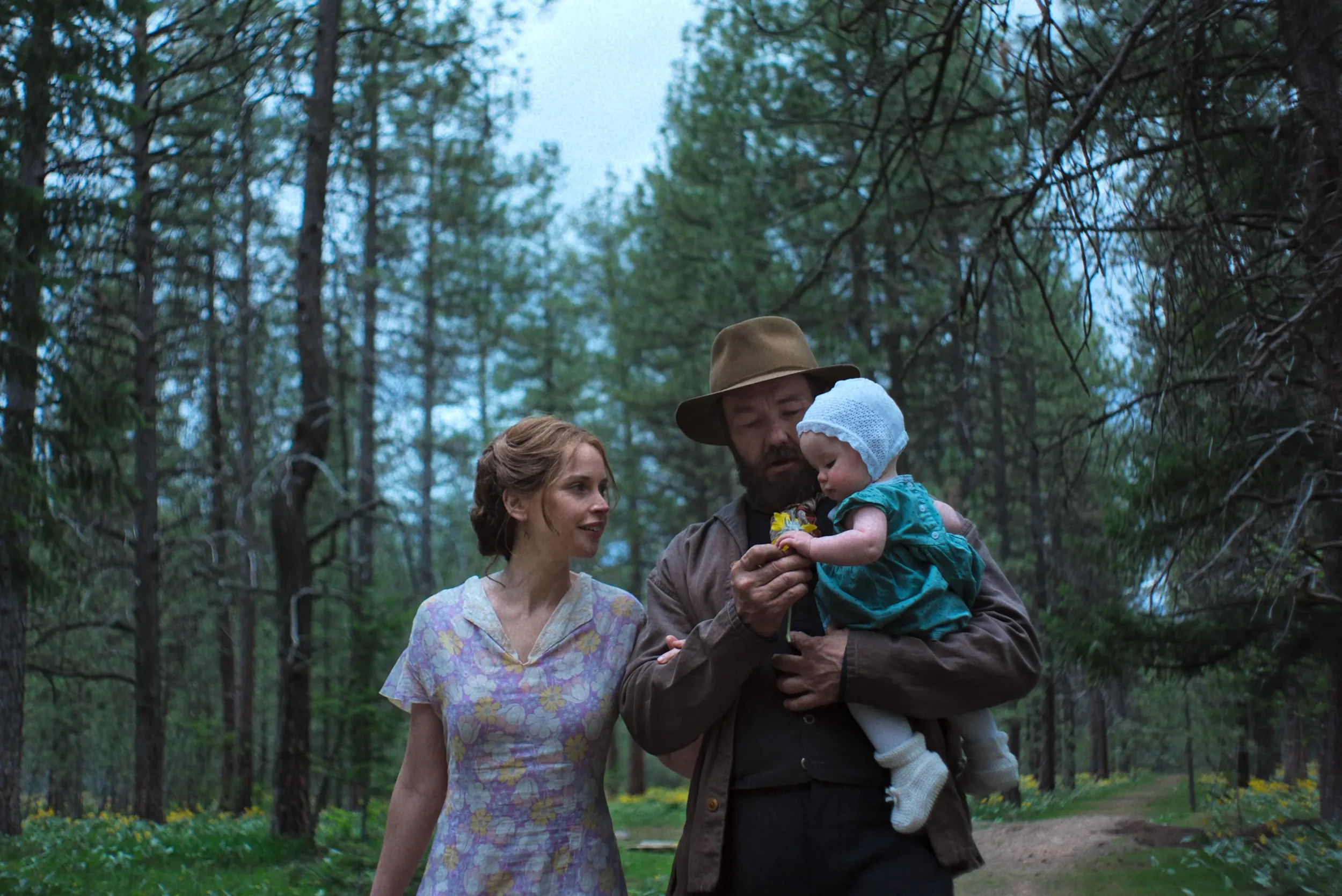
Train Dreams is a quietly beautiful historical drama directed by Clint Bentley and co-written with Greg Kwedar. It is based on Denis Johnson's novella of the same name. Joel Edgerton plays Robert Grainier, a logger and railroad worker whose life takes place in the early 1900s in the vast and ever-changing American West. It is a movie that is based on stillness, the gradual passage of time, loss, remembrance, and the ground. There is a strong, poetic emotional core beneath its quietness, and Edgerton carries a lot of it.
Robert Grainier starts out as an orphan and grows up in the forests of the Pacific Northwest, where he cuts wood and helps build railroads. He marries Gladys (Felicity Jones), and they create a home together. However, a lot of his life is marked by long absences due to jobs, the wilderness, natural disasters, and sadness. Robert is stuck between what he builds and what he loses as the railroad pushes, the trees fall, the seasons change, and technology gets better. The movie doesn't rush; instead, it takes its time with scenery, work, sadness, and the silent times when nothing seems to change but the weight on a man's face.
Train Dreams is frequently stunning to look at. Adolpho Veloso's cinematography makes forests, flames, the sky, and tracks become people in their own right. Bryce Dessner's score is often sparse and sometimes soaring, which emphasizes the longing and the intervals between actions. Will Patton's narration helps the movie stay true to its literary basis by giving us lines of thought that balance what we see with what we feel.
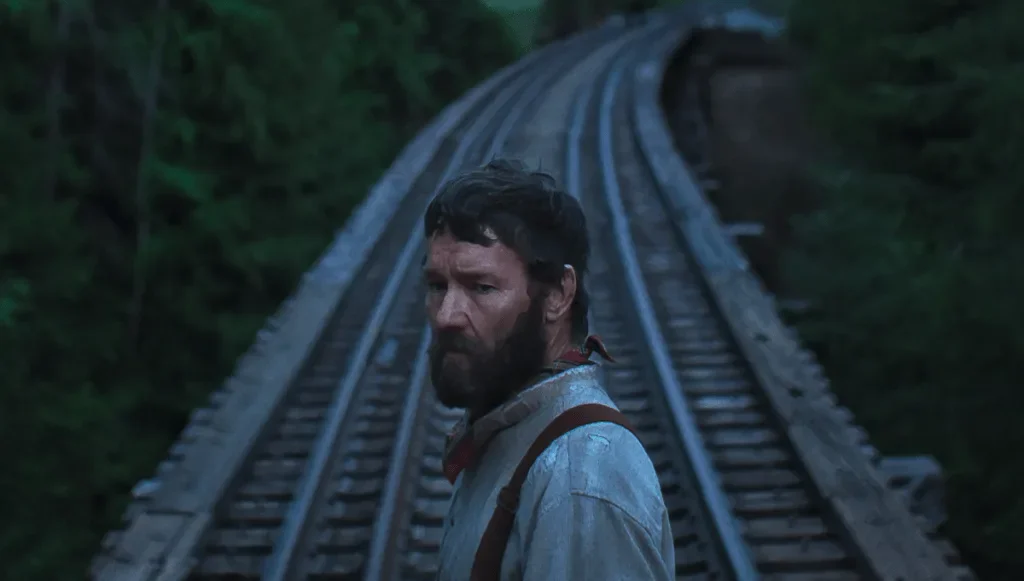
Many critics are already calling Edgerton's performance one of his best. It's not a job of big gestures or obvious drama; it's about being honest, dealing with sadness, and illustrating what it means to keep going even when it feels like nothing matters.
He bears the weight of Robert Grainier, both physically and emotionally. His actions show a body memory of the work he did in the woods, the cold, the distance, and the separation. A stance, a look, a pause—all of these things add up. When Gladys goes missing or anything terrible happens, Edgerton doesn't show his pain right away. Instead, the sadness settles in, rattles up his life, and changes how he stands in a room, how he goes back to work, and how he watches the seasons change.
One of the best things about his work here is how well he can connect presence and absence. Felicity Jones's Gladys is always with Robert, even when she's not there or on the screen. She molds his life. We can feel that shape because of Edgerton's performance. It's not sad in a theatrical way; it's something more real, more honest, and more powerful.
Setting and mood: The movie doesn't only show the environment; it lives in it. Robert's life is full of texture because of the difference between the raw elements (forests, storms, fire, work) and the domestic times.
Emotional realism: The film doesn't go overboard with drama, so the simpler moments—coming home, waiting, and losing someone—are more powerful. Edgerton's solid performance makes sure that these moments don't get forgotten.
The movie trusts its viewers to sit with uncertainty, to feel sadness, and to notice what isn't said. It moves slowly, and at moments it feels like it goes on forever. Some viewers could get tired of how long it takes. Sometimes there is emotional distance: since most of Robert's inner life is silent, it can be hard to truly understand his anguish, especially if you don't like meditative storytelling.
Train Dreams is less of a grand story and more of a sad song—an elegy for lives that weren't honored, for trees that were cut down, and for relationships that were strained by silence and change. It's one of those rare masterpieces where what isn't expressed is just as important as what is.
Joel Edgerton holds the movie together. His performance is quietly powerful, as he maintains his strength in the face of pressure, undergoes transformation due to loss, and finds solace in fleeting moments of kindness and reminiscence. He gives Robert Grainier a sense of humanity that stays with you beyond the last shot.
Train Dreams is a must-see if you like movies that let quiet speak, create a mood, and show everyday lives with outstanding attention. It may try your patience, but it pays off with beauty, sadness, and the feeling that something lasting remains even when trees fall.
The film will be released in select theaters in the United States on November 7, 2025 and on Netflix globally November the 21st.