Lanterns" Proves HBO Can Do Superheroes Right
by Kathia Woods
There's a moment early in "Lanterns" when you realize this isn't the Green Lantern story you were braced for: no CGI-suited quips, no cosmic exposition dump. Instead, HBO's new DC drama plants its intergalactic cops in the dust of small-town Nebraska and dares you to sit with the mystery. It's a gamble, and it pays off.
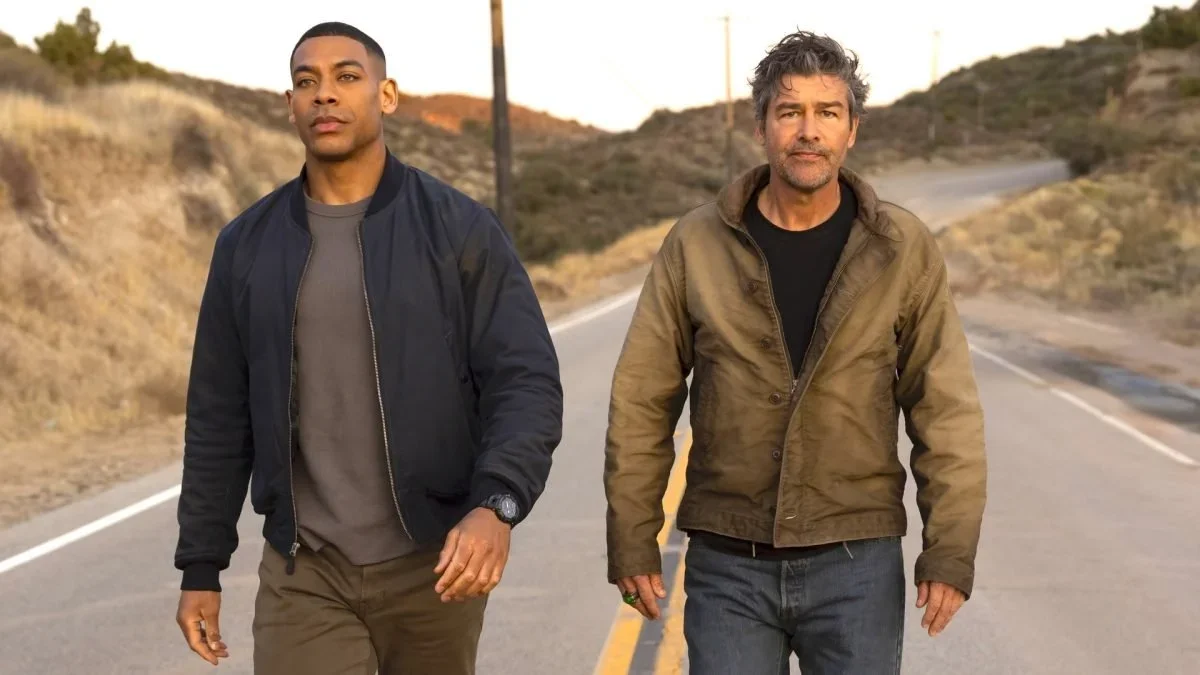
Created by Chris Mundy, Damon Lindelof, and Tom King, "Lanterns" pairs Kyle Chandler's grizzled, world-weary Hal Jordan with Aaron Pierre's sharper, more disciplined John Stewart, sending the two to investigate a shooting that turns out to be the tip of something much stranger. The premise sounds like a genre mashup on paper — space cops meet prestige crime drama but the execution is what sells it. This is a show that trusts its audience to sit in ambiguity rather than spoon-feeding mythology.
Chandler is the season's secret weapon. He plays Hal not as a golden-boy hero but as a man whose swagger has curdled into something closer to entitlement, and it's magnetic to watch. Critics have singled out his performance for its texture one review noted there's something almost hypnotic about the way he uses his expressions to carry scenes that might otherwise sag under exposition. Pierre, meanwhile, gives John Stewart a quiet, coiled intensity: a military-trained sniper who can't get the respect his skill set has earned him and whose frustration simmers just beneath a composed exterior. The two actors are mismatched in exactly the right way, an odd-couple dynamic that recalls "True Detective" more than any prior comic book adaptation—a comparison critics have made pointedly, and one the show mostly earns.
That's the smartest choice "Lanterns" makes: it isn't interested in being the Ryan Reynolds movie's redemption arc. It barely puts its heroes in the suits. It leans instead into the procedural bones of a small-town mystery, letting the sci-fi elements creep in sideways rather than announcing themselves. When the show does open the door to its wider universe, the rings, the lore, and the sense that something much bigger is circling this quiet Nebraska town, it does so with restraint, which makes those moments land harder.
It helps that "Lanterns" doesn't feel like corporate IP management dressed up as television. HBO has plenty of experience turning franchise material into something with genuine authorial voice, and this is another entry in that tradition rather than a capitulation to it. One critic put it well: the series feels like a bright addition to the network's slate rather than an obligatory checkbox. That distinction matters, especially in a moment when superhero fatigue is a real and reasonable complaint. "Lanterns" earns its place by refusing to behave like everyone expects a superhero show to behave.
Kelly Macdonald rounds out the cast with a grounded local presence that keeps the show tethered to its Nebraska setting even as the mystery widens. And the writing, co-helmed by Lindelof no stranger to slow-burn, mythology-driven television gives the season room to breathe. Episodes function as their own contained puzzles while quietly stacking the deck for a bigger reveal, and by the time the season's twist arrives, it recontextualizes everything that came before it in a way that feels earned rather than gimmicky.
Is it perfect? No. The pilot asks viewers to accept a lot of tonal whiplash a hard-boiled detective story one minute, cosmic mythology the next—and newcomers to the Green Lantern corner of DC lore may feel a step behind before the show catches them up. But that's a minor price for a series this confident in its own identity. "Lanterns" isn't trying to be everything to everyone. It's trying to be specific, patient, and genuinely strange, and in an era of interchangeable superhero content, that specificity is exactly what makes it worth your Sunday night.
"Lanterns" airs Sundays on HBO and streams on HBO Max.