Wyclef Jean Takes It to the People: A Fugees Legend Brings the Party to Rocinha
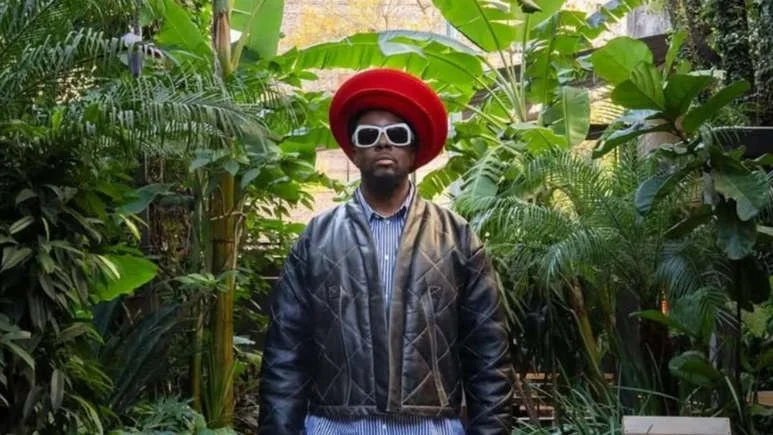
RIO DE JANEIRO — Some artists perform for the people. Wyclef Jean performs with them.
The day after sharing a stage at Enseada de Botafogo with Lauryn Hill, Zion Marley, and YG Marley for Global Citizen Live, the Haitian-born Fugees co-founder could have taken a break after one of Rio de Janeiro's most star-studded nights. Instead, he made a significant impact by showing up in the community.
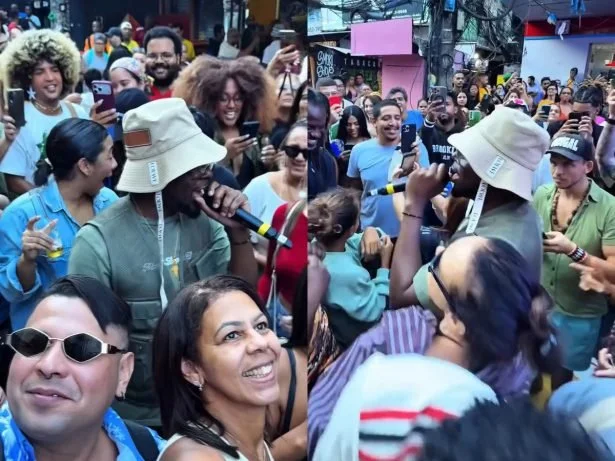
On Sunday, June 7, Wyclef Jean performed a free show in Rocinha, one of Rio's most iconic favelas, on a stage erected on Via Ápia — a main thoroughfare in the community that has been buzzing on social media for its vibrant FIFA World Cup decorations.
The surprise concert was announced as a free event. The stage was set up at 2 p.m. on Via Ápia, one of the community's primary gathering points. The moment felt less like a scheduled stop and more like a statement—that global stages and favela streets are not mutually exclusive and that the communities the world too often overlooks deserve the same energy as any arena or beachfront concert.
The performance was part of the broader Rio Nature & Climate Week, an initiative positioning Brazil at the center of environmental discussions across the Global South. However, Wyclef, as always, ensured that the institutional context did not overshadow the human moment. He performed hits including "Hips Don't Lie," his iconic Shakira collaboration, along with "Guantanamera" and "Maria Maria"—and at one point, stepped down from the stage entirely to sing in the middle of the crowd.
That gesture — leaving the elevated platform to stand shoulder-to-shoulder with Rocinha residents — captured something essential about why Wyclef Jean endures. He has always understood that music is not a transaction. It is a communion.
João Bosco, president of Rocinha's residents' association, celebrated the decision to bring the international star to the favela for a free show, underscoring the positive impact of cultural actions that mobilize the community. And mobilize it did. Against a backdrop draped in World Cup fever—the tournament officially underway across Brazil, the United States, and Canada—Rocinha became a scene of pure joy, one that no VIP section could replicate.
The timing was not incidental. Wyclef Jean had been in Rio as part of his participation in Global Citizen Live on Saturday, June 6, at Enseada de Botafogo, a night that brought together music and advocacy at one of the city's most beloved outdoor settings. But his choice to follow that with a favela show reflects a philosophy he has carried since his earliest days—from the streets of Haiti to the global stages of the Fugees and beyond. He knows where he comes from. He never pretends otherwise.
As a founding member of the Fugees, whose 1996 album The Score achieved monumental global success, earned two Grammy Awards, and received a nomination for Album of the Year, Wyclef's catalog is already part of the permanent soundtrack of the African diaspora. But moments like Rocinha remind us that legacy is not built only in studios and on arena stages—it is built in places like Via Ápia, where a man from Haiti gets off a stage to stand among Brazilian favelados and sing.
Following the performance, Wyclef took to social media to personally thank Rocinha's residents' association—a small but telling act of recognition from an artist who understands that gratitude flows in both directions.
With the World Cup in full swing and the eyes of the planet fixed on Brazil's pursuit of a sixth title—the long-awaited hexa—Rocinha's stage on Via Ápia offered something the tournament's biggest matches can't guarantee: an unscripted moment of pure cultural electricity. Wyclef Jean brought the music. The community brought the soul.