Being Black in Brazil Is Not the Same as Being African American
One of the most common misconceptions Americans carry about Brazil is the belief that race works the same way everywhere. It doesn't — and understanding the difference is the first step toward understanding Brazil.
I identify as Black. That has always been clear to me. But I am not African American — and that distinction matters more than many people realize.
African American identity is tied to a specific history in the United States — slavery, segregation, and the long, ongoing fight for civil rights within that country. Black Brazilian identity comes from a different historical path, shaped by Brazil's own history, culture, and social structure. These are not the same story. And yet, when Americans encounter Brazil, one of the most common mistakes they make is applying their own racial framework to a country that has built something entirely different — for better and for worse.
Understanding that difference is the first step toward understanding Brazil.
🏫 Learning Brazil From Inside the Classroom
Brazil received more enslaved Africans than any other country in the Western Hemisphere — an estimated 4.8 million people, compared to roughly 400,000 brought to what would become the United States. That staggering difference in scale shaped everything: language, religion, food, music, and the way identity itself is constructed.
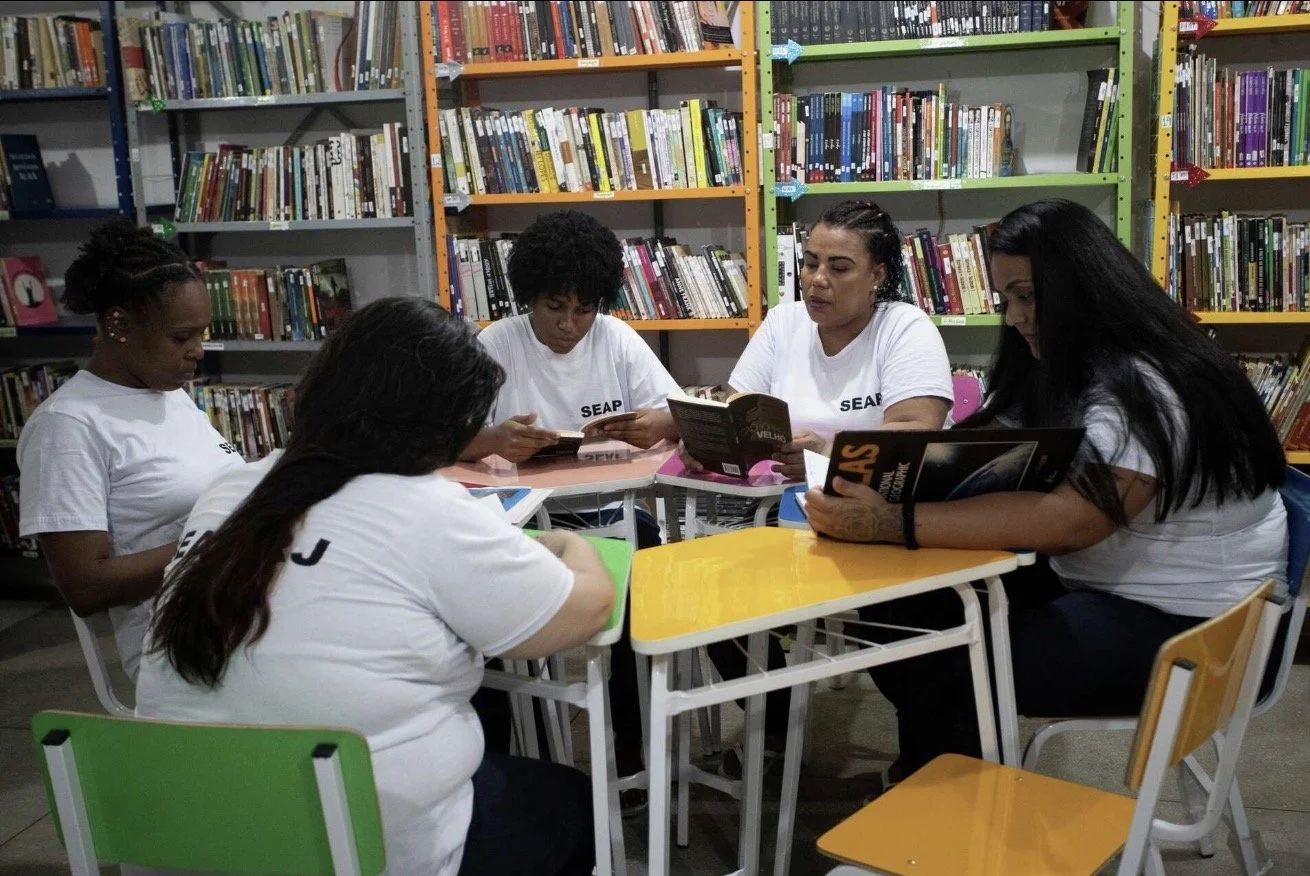
In Brazilian schools, children learn that their country is a democracia racial — a racial democracy. For generations, this was the official national story: that Brazil had transcended the brutal divisions of race that scarred other nations. That because of all the intermingling across African, Indigenous, and European ancestry, Brazil was something special. Something harmonious.
It is a beautiful story. It is also, in large part, a myth — one that generations of Afro-Brazilian scholars, activists, and artists have spent decades dismantling. But the persistence of that story tells you something important: racial identity in Brazil was never constructed the same way it was in the United States, where the law itself drew a hard line between Black and white and enforced it with violence.
Brazil received more enslaved Africans than any other country in the Western Hemisphere. That staggering difference in scale shaped everything — language, religion, food, music, and the way identity itself is constructed.
👨🏾👩🏾👧🏽 Mixed Families Are Common — Not Exceptional
In the United States, the "one-drop rule" — the legal and social principle that any African ancestry made a person Black — shaped how race was defined for centuries. It created a binary. You were Black, or you were white. The line was enforced and policed.
Brazil never had a one-drop rule. Instead, Brazil developed dozens of racial categories — terms that mapped the gradations of skin tone, hair texture, and facial features in ways that do not translate neatly into English. Words like moreno, pardo, mulato, sarará, cabo verde. The Brazilian Institute of Geography and Statistics once identified over 130 distinct color terms Brazilians used to describe themselves.
In a Brazilian family, it is entirely common to have siblings, parents, and cousins who would be coded as different races by American standards. A grandmother who is dark-skinned. A cousin who is fair. An uncle who is somewhere in between. And all of them — sitting at the same table, eating the same feijoada, sharing the same last name. Mixture is not the exception. It is the norm.
This does not mean racism does not exist. It absolutely does. But it means racism in Brazil often operates differently — sometimes more subtly, through class, through colorism, through the quietly held assumption of what kinds of beauty, intelligence, and opportunity belong to whom.
🇺🇸 The American Lens Doesn't Always Fit
I have watched American visitors arrive in Brazil and immediately begin sorting people — trying to figure out who is Black, who is white, who is mixed. They apply the categories they know. And they get confused, because the categories do not map cleanly.
Someone who would be considered Black in the United States might identify as moreno in Brazil — a term that resists easy translation but roughly suggests a warm, mixed complexion. Someone who would be coded as white in the U.S. might, in Brazil, have strong African ancestry that is simply not visible on the surface. And someone who looks, by American standards, definitively Black might insist that they are simply Brazilian — full stop.
This is not denial. It is a different relationship to identity. And as an outsider — even one with Brazilian roots — it is not your place to correct it.
Someone who would be considered Black in the United States might identify as moreno in Brazil. This is not denial. It is a different relationship to identity.
🇧🇷 Racism Exists — But It Looks Different
Let me be clear: Brazil is not a post-racial paradise. The myth of racial democracy has been used for decades to suppress conversations about inequality, to dismiss discrimination, and to make Afro-Brazilians feel that they have no grounds to protest because, officially, everyone is equal.
The data tells a different story. Black Brazilians — particularly those who identify as preto or pardo — are overrepresented in poverty, underrepresented in universities and corporate leadership, and disproportionately affected by police violence. Brazilian cities like Salvador and Rio de Janeiro have some of the highest homicide rates in the world for young Black men.
The Movimento Negro — Brazil's Black consciousness movement — has been fighting for recognition, reparations, and anti-discrimination policy for decades. Activists like Abdias do Nascimento, scholars like Lélia Gonzalez, and artists like Milton Nascimento have insisted, loudly and persistently, that Afro-Brazilian identity is not something to be blended away or made comfortable for the national myth.
But the way that fight is waged, the language it uses, and the history it draws on are distinctly Brazilian. It is not the same as the African American civil rights tradition — even when both are rooted in resistance to anti-Black racism.
🧭 Identity Is Personal — and Cultural
When I say I identify as Black, I mean that in a personal and global sense — a recognition of African ancestry and shared experience across the diaspora. But I also carry my Brazilian heritage. Those two things are not in contradiction. They are both true at once.
What gets complicated is when one framework — usually the American one, because American culture exports itself so aggressively — is applied to someone else's reality without their consent. When an American assumes that a dark-skinned Brazilian must identify as Black in the American sense. Or when a Brazilian assumes that because everyone has mixed ancestry, racism simply cannot exist. Both are errors. Both do harm.
Identity is personal. It is also cultural. It lives in language, in music, in the food you grew up eating, in the stories your family told about where you came from. No outside observer gets to collapse that into a category that fits their own map of the world.
🇧🇷 Why This Conversation Matters for Visitors
If you are planning to visit Brazil — or if you are simply trying to understand it from a distance — here is what I want you to take with you: arrive with curiosity, not conclusions.
Do not assume that the racial tensions you know from the United States are the same tensions you will find in Brazil. Do not assume that because people look a certain way, they identify a certain way. Do not assume that because racial harmony is the official story, it is the lived reality. And do not assume that because racial inequality exists, the solution must look exactly like what it looks like somewhere else.
Brazil is not a simpler version of America with a warmer climate. It is one of the most complex societies on earth — a place that absorbed more of the African diaspora than almost anywhere else, that built an entire national culture around the myth of its own harmony, and that is still, slowly, honestly, reckoning with what that means.
🇧🇷
The conversation about race in Brazil is ongoing, evolving, and deeply important. Afro-Brazilian activists, scholars, and artists are at the center of it. If you want to understand Brazil, start there — not with your own country's framework, but with theirs.
I identify as Black. I have Brazilian heritage. I am also an American-based journalist who has spent years covering culture across borders. All of those things shape how I see the world — and none of them alone is the whole picture.
That is the point. Identity is not a checklist. It is a living, breathing, complicated thing. And the first step toward understanding any culture is being willing to let it be more complicated than you expected.