Poverty Is Not a Tourist Attraction — So Why Are We Treating It Like One?
The uncomfortable truth about favela tourism, who actually profits from it, and why so many African Americans are flying to Brazil to witness poverty they’ve never had to leave home to see
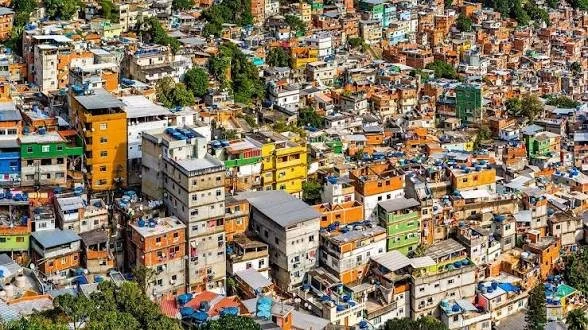
The jeep arrives on schedule. It winds up through narrow streets, past laundry strung between windows; past children on steps; past men watching from doorways. The tourists have their cameras ready. Some tourists feel nervous, but this nervousness resembles excitement for those who have never had a reason to be anxious about their own neighborhood. The guide speaks in practiced English about resilience, community spirit, and the entrepreneurial energy of the favela. He is excellent at his job. At the top of the hill, someone snaps a photo of the view. Rio spreads out below like a postcard. Everyone agrees it is breathtaking.
Somewhere below, in the streets that the jeep did not traverse, life continues as it did before the tourists arrived—complicated, underserved, and largely unaffected by the admission fee paid by anyone to view it.
Favela tourism is one of the most debated ethical questions in travel today. Proponents call it community immersion. Critics call it what it often is: poverty tourism. The answer, as with most things in Rio de Janeiro, is not simple. But it is honest — if you’re willing to ask the questions the brochure doesn’t raise.
What Favela Tourism Actually Is
Organized tours of Rio's favelas, particularly Rocinha, Vidigal, and the Complexo do Alemão, have been around since the 1990s, but they gained significant popularity in the post-"City of God" era, when international interest in favela life peaked. By the time the 2014 World Cup and 2016 Olympics arrived, favela tours had become a standard line item on the Rio tourist itinerary, packaged alongside samba shows and Christ the Redeemer.
The tours vary significantly in format and intent. Some are operated by community-based organizations genuinely rooted in the favela, employing local guides, directing spending toward local businesses, and operating with the knowledge and, to varying degrees, the blessing of community leadership. Others are operated by commercial tourism companies headquartered in the Zona Sul or Barra da Tijuca, using guides who may have no organic connection to the communities they lead paying strangers through. These are not equivalent experiences, and they should not be treated as such.
“The tours in Rocinha go to the poorest areas; the tourists take pictures of the poor people in miserable houses, and then they go back home.”
— Bernadete Soares Pereira, Rocinha resident- told the Associated Press /Latin America Team
Pereira's statement highlights a fundamental critique of poverty tourism: the community serves as the exhibit, rather than the beneficiary. The uncomfortable reality is that the majority of favela tourism infrastructure—the booking platforms, the jeeps, the packaged itineraries, the hotel concierge recommendations—routes most of its revenue away from the communities it markets. A 2019 study by researchers at the Pontifical Catholic University of Rio found that in several of the city’s most popular favela tour operations, less than 20 percent of tour revenue was reinvested in the community in any traceable way. The communities are the product. They are not, in most cases, the beneficiaries.
Who Actually Controls the Favela — and Who’s Greenlighting Your Tour
Here is the conversation that most favela tour companies would rather not have with their clients: no organized activity happens inside a favela without the knowledge and implicit approval of whoever controls that territory.
In Rio’s favelas, territorial control is divided primarily between three forces: drug trafficking factions—most prominently the Comando Vermelho, the Terceiro Comando Puro, and the Amigos dos Amigos—along with the Milícia, former and current police officers who seized control of communities across the West Zone and parts of the North Zone, and, in some communities, UPP-pacified territories under state police authority. This control is not theoretical. It governs everything from commerce to construction to who comes in and who goes out.
“Without a UPP, you couldn’t even think about tourism.”
— Cleber Geraldo Santos, founder of Turismo no Alemão, Complexo do Alemão
Santos’ candor is instructive. The pacification program—which deployed police units to suppress gang control in select favelas—was a direct precondition for organized tourism in many of these communities. When pacification collapses, as it has in several communities recently, the tourism infrastructure collapses with it. The safety that tourists experience is not the organic safety of a welcoming community. It is a condition imposed by state force, maintained precariously, and subject to reversal without warning.
Outside-company guides, with no real roots in the community, cannot read these shifts, which can lead to misunderstandings and misrepresentations of the local context and dynamics. That distinction is the difference between a managed experience and genuine risk.
“They come with outside guides, who don’t know the history, the culture, or the collective memory and even invent things. They take photos of children without authorization, they take photos of women sunbathing without authorization, and they take pictures of people inside their houses without authorization.”
— Vitor Lira, Guide for the Historic Tour of Pico do Santa Marta in the Santa Marta favela
Lira’s frustration speaks to what may be the most underreported dimension of this industry: the violation of dignity that happens every day inside communities where outside companies have decided the residents’ lives are content. The children in those photographs never consented. The women sunbathing in their neighborhood never agreed to become someone’s Instagram story. And the outside guide who allowed it will board a bus back to Ipanema when the tour ends.
The African American Pilgrim in the Favela: A Mirror No One Wants to Hold Up
Among the visitors on favela tours, a significant and growing contingent is African American. This is worth examining carefully, not to assign blame, but because the pattern reveals something important about how Black Americans have been conditioned to relate to poverty — their own and other people’s.
There is a real and understandable draw. Many African Americans traveling to Brazil are seeking connection to the African diaspora, to a Blackness that feels less embattled than the one they navigate at home—and proof that Black communities can build culture and beauty and resilience in defiance of structural violence. The favela, framed correctly, offers a version of that narrative.
But here is the question that cuts: Why is it easier for African Americans to book a flight to Rio to visit Rocinha than it is to drive to the South Side of Chicago, or North Philadelphia, or parts of Newark, or Compton, or any number of American communities living under conditions structurally identical to what a favela tour is framed as illuminating?
The poverty of the Black American ghetto doesn’t come with a guide. It doesn’t have a soundtrack or a jeep. There is no cultural reframing that makes it feel like an adventure rather than a failure—a failure of policy, investment, or national will. American poverty is too close, too politically charged, and too personally implicating for many visitors to romanticize. Brazilian poverty, when viewed through the lens of samba aesthetics, feijoada, and a breathtaking hillside view, presents a different perspective.
The distance—geographical, linguistic, and cultural—is precisely what makes it consumable. And that is worth sitting with honestly, because curiosity and solidarity are not the same thing. Curiosity flies to Rocinha with a camera. Solidarity asks what it can do about Englewood.
Does the Money Actually Go Back to the Community?
This argument is the claim most often used to morally launder favela tourism, and it deserves rigorous scrutiny because the answer is "sometimes, partially, in ways that are very difficult to verify and that vary enormously depending on the operator."
“We are not romanticizing poverty. We want to change the prejudice that exists in people’s minds.”
— Renan Monteiro, founder, rooftop tourism operation in Rocinha
Monteiro’s defense is the standard industry response, and it is not entirely without merit. Rocinha’s rooftop experience — which charges at least $30 per person and has generated viral global attention — does employ community members and creates demand that flows to local vendors. But the critical question is never whether any money circulates; it’s who controls the architecture of that circulation and who captures the majority of it.
The strongest case for genuine community benefit comes from resident-led operations. The Rolé dos Favelados—activist-guided tours of favela communities run by Cosme Felippsen, who founded Providência Tourism in 2013—is one of the most cited examples. Felippsen describes his work not as tourism in the conventional sense but as a political act: trips into Rio favela communities with activist residents that function as a tour and a debate about what the favela is and about its culture, and about the city and human rights. Today, the majority of those who visit with him are Brazilians and Rio residents, including people from other favelas—a detail that reframes what “community benefit” can look like when the community is actually driving.
But this model is the exception, not the rule. The weakest case—which unfortunately describes a significant portion of the market—is the commercial operator, who uses community access as a selling point while routing the financial architecture of the business firmly outside of it. These companies may employ one or two community members as guides while retaining the majority of revenue in corporate structures with no favela address. The community gets foot traffic and perhaps some incidental spending. The operator gets a product.
The Dignity Question That Tourism Can’t Answer
Even when we set aside the economics, there is a question that no tour operator can satisfactorily resolve: What does it mean to invite paying strangers to observe how poor people live?
“Vidigal has become a different place. The price of everything has increased.”
— Rosa Amalia Brito, 63, has been a resident of Vidigal for 47 years told RioOnWatch
Brito, who runs a canteen on a steep laneway in Vidigal, has watched her neighborhood transform since pacification brought tourists to her doorstep. Rice and beans have gone up in price. A studio apartment that once rented for 500 reais now costs far more. She describes what has happened to her community with one word: “Absurdo.” It is a word that contains a great deal of history.
Favelados have complex and divided opinions on tourism. Some welcome it as economic opportunity and a corrective to the criminal stigma that Brazilian media has historically applied to their communities. Others find it dehumanizing. The mother hanging laundry that becomes someone’s Instagram content did not consent to that. The child playing in the street who ends up in a travel blog is not a cultural ambassador. These individuals are simply living their lives, but they became visible at the moment when someone with a camera decided to capture their poverty as picturesque.
So Who’s Right?
Both sides of this debate are right about different things, and the truth lives in the space between them that most participants in the conversation refuse to inhabit.
“If it’s wrong to visit because it’s dangerous, it must be wrong to live there, right? At this very moment that we’re talking, children are dying. And nobody cares. People want to go to enjoy the samba and have a beer, but then something terrible happens, and they turn against the favela and distance themselves from it. What is happening here is not a war; it is the extermination of a poor, Black, and favela-dwelling population.”
— Cosme Felippsen, favela resident and founder, Providência Tourism
Felippsen’s provocation is the most important one in this entire debate. His argument is not that tourism is good or evil — it is that the selective outrage around favela tourism reveals something deeply hypocritical about how outsiders engage with these communities. The same people who recoil from a jeep tour will happily stream a favela-set Netflix series. The same media that questions whether tourism exploits these communities has spent decades printing headlines that associate favelas exclusively with crime and death. Outsiders, Felippsen is saying, only want to engage with the favela on their own terms, at a safe remove, and they reserve the right to withdraw when it becomes inconvenient.
The critics of favela tourism are right that most of it, as currently structured and consumed, is poverty tourism. The cameras, the jeeps, the social media content, the discomfort dressed up as bravery — these are the mechanics of spectacle, not solidarity.
The defenders are right: community-rooted, genuinely participatory tourism—which employs residents, circulates money locally, amplifies community voices, and builds real cultural exchange—can be a force for good. This version exists. It is rarer than the marketing suggests, but it is real.
And on the African American dimension: the draw is real, the desire for diasporic connection is valid, and the frustration with how American ghettos are discussed—without the cultural framing, the romance, or the marketed resilience narrative—is worth taking seriously as a critique of American media and politics. But the selectivity is still worth examining. Solidarity without proximity is still spectatorship, whatever passport you hold.
A Checklist for Anyone Considering a Favela Tour
If you are going to engage with favela tourism at all, you owe yourself—and the community—these questions:
Who owns the company? Is it registered to an address inside the favela or to a commercial address in a wealthier district?
Is your guide actually from the community, or were they hired by an outside company to play a role?
Can the operator document what percentage of revenue stays in the community? If they can’t or won’t answer, that is itself an answer.
Are you consuming or participating? There is a difference between buying a craft from a local artisan and photographing someone’s house.
Would you be okay if the people you’re photographing saw the caption you’re writing about them?
These are reasons to engage with favela communities. They are reasons to engage with intention rather than appetite, with accountability rather than aesthetics, and with the recognition that the people who live in these places have a full and complex humanity that exists whether or not you have paid to witness it.
Rio’s favelas are not a museum exhibit. They do not serve as a credential for social justice. They are not an adventure activity. They are neighborhoods. The people in them deserve to be engaged with on those terms — not because it’s more ethical, but because it’s simply more true.