
The Sound of a Nation: Why Gilberto Gil Is Brazil's Most Important Artist
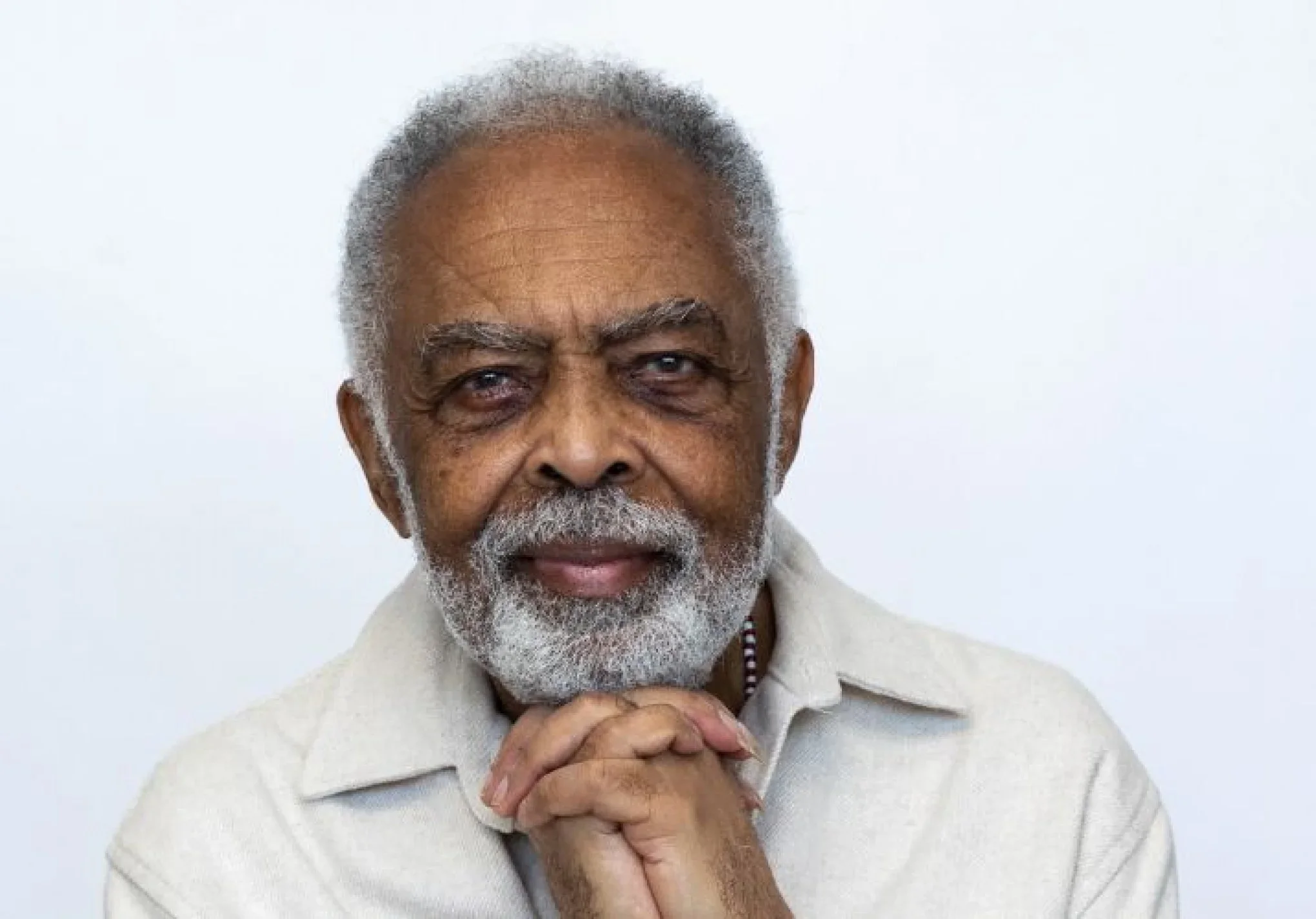
There are artists who entertain. There are artists who endure. And then there is Gilberto Gil—a man whose music didn't just reflect Brazil; it helped define it.
Born on June 26, 1942, in Salvador, Bahia, Gilberto Passos Gil Moreira grew up in the small interior town of Ituaçu before moving to Salvador for his education — a journey that would eventually take him from accordion lessons to the world's greatest stages. Over the course of a career spanning more than six decades, Gil became something rare: an artist whose relevance never dimmed, whose curiosity never calcified, and whose commitment to his people never wavered.
To call him simply a musician would be a profound understatement.
The Architect of Tropicália
To understand Gil's importance, you have to understand what Brazil was in the late 1960s—a nation strangled by military dictatorship, its artists gagged, its culture policed. It was in that climate that Gil and his longtime collaborator Caetano Veloso chose not silence but revolution.
Gil's song "Domingo no parque" ("Sunday in the Park") was considered one of the seeds of Tropicália—a hybridization of rock music, samba, funk, soul, and other styles that reflected the upheaval of the era. The movement was audacious in its refusal to choose between the local and the global, the traditional and the avant-garde.
Gil and Veloso were already defending an aesthetic of métissage, open to the world—promoting a som universal (universal sound) that drew equally from Anglo-Saxon pop, Carmen Miranda's sambas, and from the rhythms of the Nordeste.
The government saw the threat clearly. Brazil's military dictatorship considered the Tropicália movement revolutionary and responded with fierce repression, resulting in Gil's imprisonment and eventual exile in London. Instead of crushing him, exile allowed him to grow and expand his influence, leading to the development of new musical styles and collaborations that would later impact Brazilian music and culture significantly.
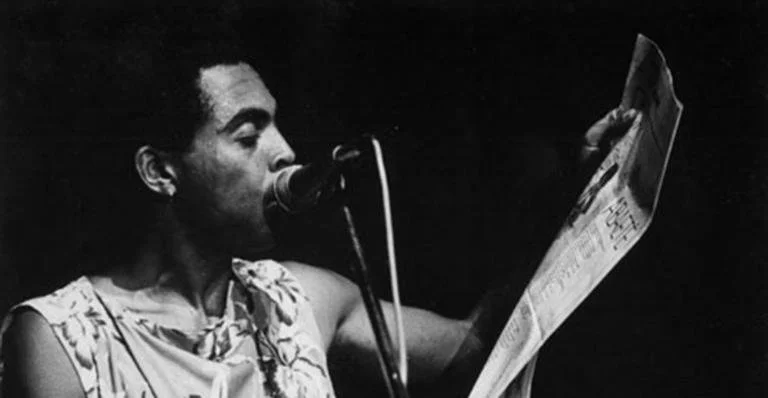
Exile, Evolution, and ReturnLondon in the early 1970s became an unlikely crucible for Gil's genius. He became involved in the organization of the 1971 Glastonbury Free Festival, was exposed to reggae while living in London—recalling listening to Bob Marley, Jimmy Cliff, and Burning Spear—and performed with Yes, Pink Floyd, and the Incredible String Band. He absorbed it all without losing himself. When Gil returned to Bahia in 1972, he brought the world back with him—embedding those influences into Brazilian music in a way that felt not like appropriation but like conversation. Upon returning to Brazil in 1972, Gil released Expresso 2222, a landmark album that solidified his status as one of Brazil's most creative musical minds. That is the Gil paradox: the more international he became, the more deeply, unapologetically Brazilian he remained.The Voice of Afro-Brazilian IdentityPerhaps no dimension of Gil's legacy is more urgent — or more personal — than his championing of Afro-Brazilian culture at a time when Brazil's racial mythology preferred to look away.His 1977 album Refavela spoke of art in the tropics, of Black communities that had contributed to the formation of new ethnicities and new cultures in the New World—in Brazil, the Caribbean, Nigeria, and the United States. Gil himself declared, "Refavela has a Brazilian accent, but it is written in an international language." That framing matters deeply. Gil didn't just make music for Black Brazilians — he made music that declared their centrality to everything Brazil is and has ever been. At a time when Afro-Brazilian culture was either exorcized or erased, his records insisted on its dignity and its universality. As a tropicalista and later as a politician, Gil sought to promote shared culture—to reconcile what is often disrespectfully referred to as "folklore" with the high culture of the intelligentsia and to fuse these with the world at large. He explained his philosophy simply and profoundly in his words: "We have to ask ourselves what culture is. It is human expression. Every gesture, every sentiment, every thought, every moment of communication between one person and another is culture."
Minister of Culture, Keeper of the People
In 2003, President Luiz Inácio Lula da Silva made a decision as culturally significant as any policy: he appointed Gilberto Gil as Brazil's Minister of Culture. Gil served in that role from 2003 to 2008, bringing his philosophy of cultural democracy directly into governance.
It was not a ceremonial appointment. Gil approached public service with the same intentionality he brought to his music—pushing for digital access to culture, championing Afro-Brazilian institutions, and advocating for the creative economies of communities long ignored by the Brazilian state.
Gil described his attitude toward politics this way: "I'd rather see my position in the government as that of an administrator or manager." But those who watched him work knew he was something far rarer — an artist who never stopped being one, even behind a desk.
A Legacy Still Breathing
With a career of over 60 years, 65 records, 2 Grammy Awards, and 7 Latin Grammy Awards, Gilberto Gil stands as one of the most celebrated Brazilian artists in the world. He was also inducted into the Brazilian Academy of Letters in 2021, further affirming his cultural stature.
In 2025, Gil announced his retirement from live performance—but not from music. "The classifications of 'last tour,' 'last chapter,' and 'end of career' are all valid," he told the New York Times. "I'm essentially on an excursion that will end a cycle that has lasted more than 60 years."
Even in farewell, Gil refused to be diminished. "I'll always have my guitar, my inseparable companion," he said. "But my relationship with it will be more open, freer. It's simpler when you don't have as many commitments."
And when asked to reflect on a lifetime devoted to music, he said what any true artist would: "I knew that music would be my language and that I would discover the world through it."
He did more than discover it. He translated it into Portuguese, into rhythm, into resistance, into joy. Brazil has many outstanding artists. But Gilberto Gil is the one who showed Brazil what it truly sounds like when it is most fully itself.