Histoires Parallèles: A Tale of Two Halves
There is a particular kind of cinematic disappointment that stings more than a bad film—and that is a good film that loses its nerve. Histoires Parallèles belongs to that frustrating category. It arrives dressed in the sophistication of French prestige cinema, and for a glorious stretch, it earns every bit of that reputation. Then, somewhere in the middle of its second act, the film simply forgets what made it worth watching in the first place.
The opening act is a genuine pleasure. The story involves a quiet sophistication that pulls you in both emotionally and intellectually while deepening your curiosity about where the film is headed. The opening scenes evoke a strong sense of discovery, hinting at a story that is building toward something profound and rewarding. That downfall does not last. The excitement of Act One soon disappears as Act Two progresses.
What was once complex has become confused. What felt purposeful began to meander. The film stretches on, scene after scene, and the engagement that had felt so natural curdles into restlessness. You find yourself checking the time—that most damning of audience behaviors—wondering when the story will find its footing again. The pacing drags with the weight of a narrative that has lost its internal compass, and what was once anticipation quietly becomes tedium. The mystery gives way to predictability, and by the time the film’s intentions become clear, you have already guessed every turn it is about to take. There is little worse in cinema than a story that stops surprising you while still demanding your full attention.
The ending, when it finally arrives, does little to redeem what came before it. Rather than delivering the emotional payoff the first act so richly promised, the film concludes with a whimper—underwhelming, unsatisfying, and oddly hollow. You leave the theater not with the resonant aftertaste of a powerful story but with the quiet deflation of potential squandered.
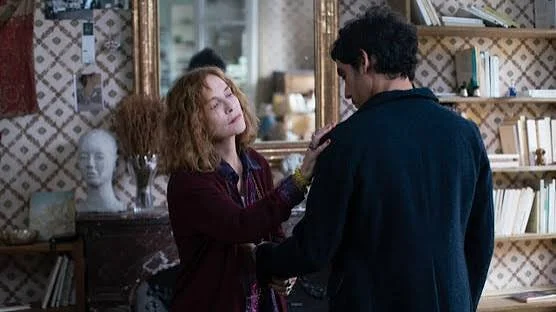
None of these factors dims the radiance of Isabelle Huppert, who delivers exactly the kind of performance that has made her one of cinema’s most essential figures. She is, from the first scene to the last, magnificent—precise, emotionally layered, and fully present in a way the film around her sometimes is not. Huppert has the rare ability to make stillness feel volcanic, and she brings that gift to bear here in full. But even her extraordinary talent cannot rescue a screenplay that ultimately lets her down. She carries the film on her back with grace, but no single performance, however transcendent, can compensate for a story that has stopped believing in itself.
The film’s most electric moment belongs, fittingly, to a cameo. Catherine Deneuve appears, and the room instantly transforms. Two monuments of French cinema sharing the frame is nothing short of a chef's kiss—a scene that crackles with the kind of effortless magic that only two legends of their magnitude can generate. It is a reminder of what this film, at its best, is capable of. It is also, heartbreakingly, a reminder of how rarely it gets there.
Histoires Parallèles is not a terrible film. It is something more complicated than that — a film of genuine gifts and genuine failures, of dazzling peaks and exhausting valleys. It had everything it needed to be outstanding. It simply chose not to be.