John Lennon: The Last Interview — A Legend Deserved Better Than This
John Lennon wrote “Imagine.” He gave us “Working Class Hero,” “God,” and “Come Together.” He was a provocateur, pacifist, poet, and perpetual headline. He lived his life almost entirely in the public eye—press conferences in bed, rooftop concerts, and political protests that made governments nervous. So when director Steven Soderbergh arrives at Cannes 2026 with John Lennon: The Last Interview, a documentary built around the final radio conversation Lennon ever gave, the expectation is that we’re in for something revelatory. That expectation goes largely unmet.
The film stems from an interview the couple gave to a San Francisco radio crew to promote their album Double Fantasy. The two-hour conversation quickly digresses from the record and encompasses topics like fatherhood, politics, the dangers of television advertising, and just about anything else that flits through John's and Yoko’s minds. Later that evening, Lennon was assassinated outside of his apartment building, rendering the interview his final words spoken on record.  The premise is haunting. The execution, unfortunately, is mostly flat.
Soderbergh is a filmmaker of considerable range and intellect, but this documentary plays it startlingly safe. For anybody who’s already read the other interviews John and Yoko did around that time, there’s nothing terribly revelatory about the conversation in The Last Interview.  And for a man who gave the world decades of art, activism, and audacity—who was photographed, profiled, and dissected by virtually every major publication on the planet—a single radio interview repackaged as cinema feels like a greatest hits compilation with no hits you haven’t already heard. This is a one-note film about a man who was anything but.
The documentary leans heavily on archival photos and footage to compensate for the fact that the interview itself was audio-only. Soderbergh also utilized Meta’s AI tools to create visuals for select sequences that accompany Lennon’s reflections—and the appallingly ugly aesthetics of the AI overwhelm any possible sensibility on display.  Whatever the intent, the result is jarring and distracting, a technological gimmick that undercuts the intimacy the film is reaching for.
Then there is the matter of Yoko Ono. As Lennon’s partner in both love and art, her presence in the interview is natural and expected. But decades after their most provocative years together, Yoko still carries the burden of a musical legacy that remains deeply contested. Her avant-garde sensibilities have always divided listeners, and nothing in The Last Interview does much to resolve that tension—nor does the film seem particularly interested in trying. More frustratingly, Yoko Ono comes across here as curiously inert, despite having lived one of the most genuinely extraordinary lives of the 20th century—surviving war, navigating fame, and enduring unimaginable public grief. A woman with that biography deserves far more than the passive role she occupies in this film. It is a missed opportunity of significant proportions.
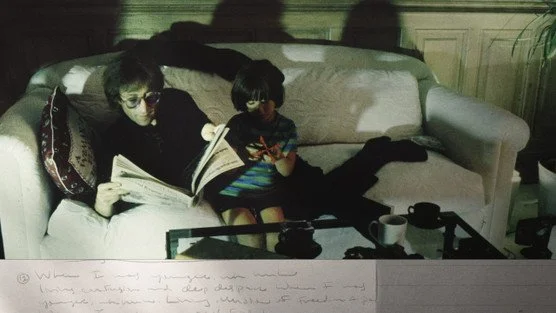
The one moment where The Last Interview earns genuine emotional weight is when Lennon reflects on fatherhood. He talks at length about his experience as a “househusband” devoted to raising his younger son Sean—and beneath that warmth lies an implicit, painful admission: he was not that father to Julian, his firstborn son from his first marriage. That quiet reckoning is the most human and unguarded beat in the entire film. It lands because it is honest, and honesty is precisely what the rest of the documentary too rarely achieves.
John Lennon: The Last Interview is currently seeking U.S. distribution following its Cannes premiere. One imagines the legend himself—never one to suffer fools or mediocrity—would have had a few choice words about it.