"El Ser Querido" Is a Masterclass in Wounds That Never Healed
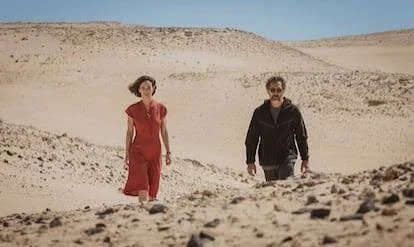
There is a particular kind of grief that lives in the body of a child who was left behind—not orphaned, not forgotten, but simply not chosen. Rodrigo Sorogoyen's El Ser Querido (The Beloved), competing for the Palme d'Or at the 79th Cannes Film Festival, understands grief with devastating clarity. This is a film about the violence of absence, and it announces itself as one of the most emotionally rigorous works to screen on the Croisette this year.
The film opens in a plush Madrid restaurant with a scene that lasts a full 20 minutes — a single, unbroken encounter between world-famous film director Esteban Martínez, played by Javier Bardem, and his estranged daughter Emilia, played by Victoria Luengo, reuniting for the first time in 13 years. To anchor the rawness of that reunion, Sorogoyen shot it on the very first day of production—and crucially, asked Bardem and Luengo not to meet or speak before the cameras rolled. The result is something almost unbearable to watch. Two strangers, who are related by blood, share a table. The silence says everything that the dialogue cannot.
Bardem is stellar. As Esteban, an acclaimed filmmaker whose reputation has been shaped by work, violence, and excess, he moves through the film with the particular confidence of a man who has never truly been held accountable—until now. What makes his performance so compelling is what he withholds. Esteban arrives at this reunion believing he is doing Emilia a favor, offering her a role in his next project, framing it as a chance to help her stalled acting career. He is charming, self-assured, and completely blind to the depth of damage he has left behind. Bardem makes you believe in this man's sincerity even as you recognize his fundamental selfishness. That tension—between the father, who wants to reconnect, and the man, who never really changed—is where the film lives.
But it is Victoria Luengo who breaks you open. As Emilia, she is tasked with something far harder than rage. Rage would be easier. What Luengo delivers instead is a woman in the impossible position of desperately wanting a father she knows she cannot trust while watching her brothers receive the version of Esteban she was denied. Every scene with Luengo is a study in controlled devastation. She wants him, and she hates herself for wanting him, and she will not let him see it. It is a heartbreaking high-wire act, and she never falls.
Sorogoyen has described his guiding word throughout production as "experiment," and that spirit is evident in the film's visual grammar. As conflict escalates between Emilia and Esteban on the set of their film-within-a-film—a period piece set in 1930s Western Sahara, shot on location in Fuerteventura—Sorogoyen begins mixing digital film, 35mm, 16mm, and 8mm, moving between widescreen and boxy formats, color and black and white. Cinematographer Álex de Pablo, a Goya Award winner for his work with Sorogoyen on The Beasts, renders Fuerteventura's arid volcanic landscape in images that feel both scorched and beautiful. The desert is not merely a backdrop—it is an emotional state. Expansive, unforgiving, and impossible to hide in.
El Ser Querido has drawn comparisons to Sentimental Value for its similar premise, but Sorogoyen's film is its own creature—less interested in nostalgia than in excavation. This film is cinema that asks how much damage a person can absorb before they stop reaching for the hand that hurt them. The answer, Luengo's Emilia shows us, is more than they should ever have to.
El Ser Querido is a Palme d'Or contender. Don't look away.