Costa Rica's Maurel Delivers One of Cannes' Most Vital Films - Siempre Soy Tu Animal Materno
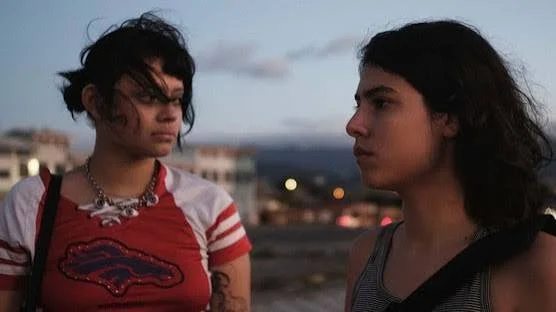
Some films arrive at Cannes with the weight of expectation. Others arrive with something rarer — the quiet, irrefutable authority of a filmmaker who simply knows what she is doing. Valentina Maurel's Siempre Soy Tu Animal Materno (Forever Your Maternal Animal), making its world premiere in Un Certain Regard, belongs firmly in the second category. This assured, emotionally precise cinema cements the director's place among the most vital voices in Latin American film.
Maurel, the daughter of celebrated Costa Rican poet Ana Istarú and French actor César Maurel, has never hidden the autobiographical current running beneath her work. In Forever Your Maternal Animal, the autobiographical current in her work becomes the central focus. She has spoken candidly about feeling frustrated by her inability to fully explore the character of the mother in her debut, I Have Electric Dreams, which centered on a father-daughter relationship. "I remember telling a journalist that my next film was going to be about a mother," she has said, "and then it felt like I had to do it. Then I realized the film is a story about how hard it is to be an artist while taking care of someone else. It comes from my own experience in life."
That personal urgency is visible in every frame. The film follows Elsa, 28, who returns to Costa Rica after years living and studying in Europe, reuniting with her younger sister Amalia, 20, who is drifting into a path as esoteric as it is. Their father, Nahuel, seeks reassurance through a series of romantic conquests, while their mother, Isabel, immerses herself in republishing the erotic poems of her youth. Elsa is left to wrestle with an impossible question: Should she try to save a sister who refuses to be saved, or flee in turn?
It is a deceptively simple premise that Maurel fills with psychological complexity and dark, wry humor. Her body of work has consistently explored adolescence, female desire, social alienation, and fractured family dynamics through a raw, darkly comic lens, and Forever, Your Maternal Animal digs further into the malaise of who—and where— the grown-ups in the room actually are. Nobody in this family has fully arrived at adulthood. That is both the film's comedic engine and its aching wound.
The performances are the film's beating heart. Daniela Marín Navarro, who won Best Actress at Locarno for Maurel's debut, brings an extraordinary stillness to Elsa—a woman who has crossed an ocean to outrun her past, only to discover it waiting patiently in the family home. Her eyes carry the specific exhaustion of someone who loves people she cannot save. Opposite her, Mariangel Villegas as Amalia is a revelation, rendering her character's withdrawal not as tragedy but as a kind of sovereign refusal—a young woman choosing the interior world over one that has offered her little.
The casting of Marina de Tavira as Isabel is nothing short of inspired. Maurel sought an experienced actress specifically because "there is something about being a mother that is very difficult to portray without being stereotypical," and de Tavira delivers a full palette and a complicated character. Her Isabel—the poet absorbed in her own creative resurrection—is neither villain nor victim. She is a woman in the middle of her life, and the film is generous enough to let her be.
Maurel insisted on shooting in Zapote, the San José neighborhood where she grew up, refusing producers' suggestions to relocate to Colombia. That insistence pays off. The streets have memory. The light has texture. There is something irreplaceable about a filmmaker who demands that her characters exist in the actual world that shaped them.
Forever Your Maternal Animal marks not just a confident sophomore effort but also the arrival of a genuinely essential cinematic voice. Maurel herself has said she feels Latin American cinema is "getting out of a certain paradigm"—and her film is proof. Costa Rica has sent Cannes something extraordinary.