Ben'Imana — A Nation's Wound, A Woman's Reckoning
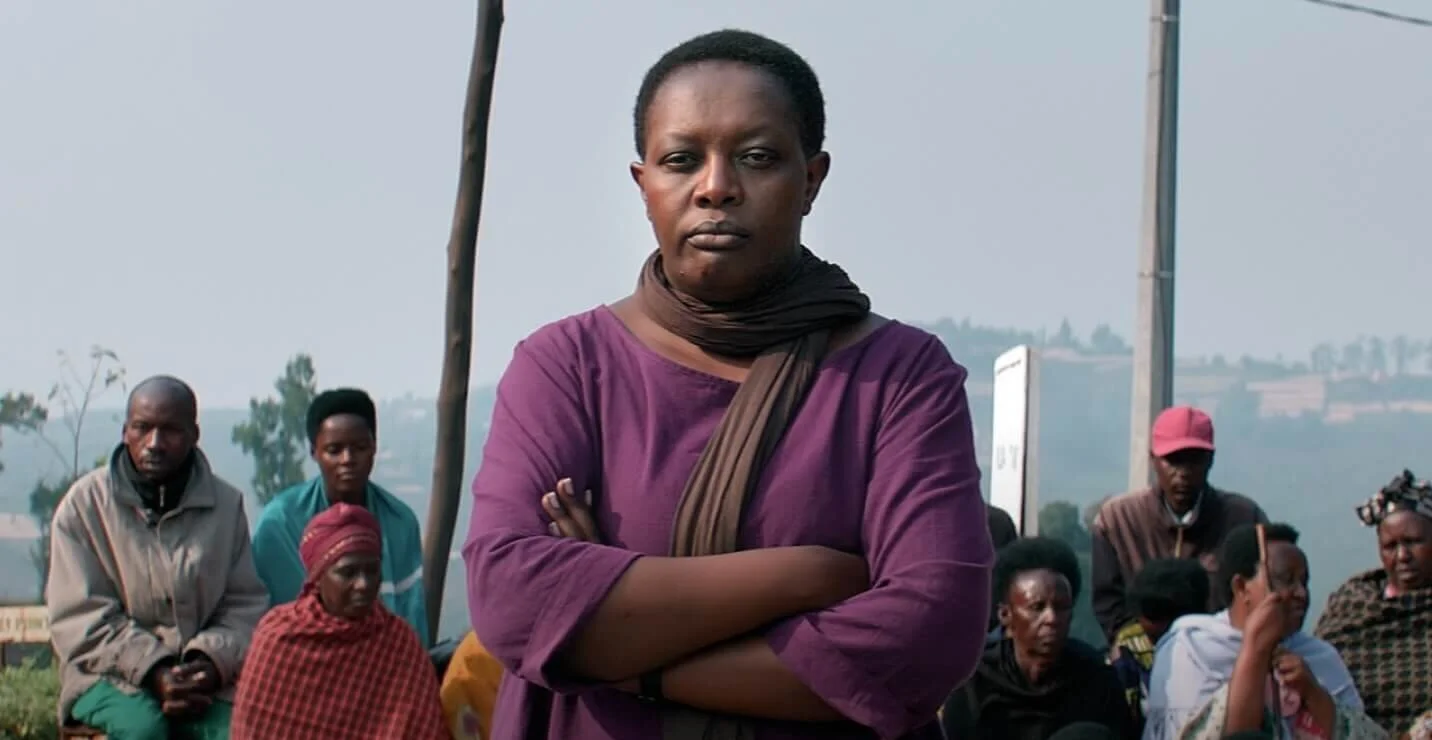
There are films that arrive at Cannes, and there are films that arrive at Cannes—the ones that cut through the noise of the Croisette and remind you why cinema, at its most essential, exists. Ben'Imana, the debut feature from Rwandan writer-director Marie-Clémentine Dusabejambo, is the latter. Screened in the Un Certain Regard sidebar and already etched into this festival's memory, it is not simply a wonderful film. It is a necessary one.
The film made history as the first by a Rwandan filmmaker to premiere within the official selection of the Cannes Film Festival—and that fact alone carries weight. But Ben'Imana earns its place not through the politics of precedent. It earns it through the full force of its artistry.
Set in Rwanda in 2012, the film follows Vénéranda, a survivor of the 1994 genocide against the Tutsi, who is involved in community-led justice and reconciliation. As she faces mounting pressures in her work, a personal crisis within her family forces her to confront the limits of her beliefs. At the center of the justice proceedings is Karangwa (Aime Valens Tuyisenge), the man accused of murdering much of Vénéranda's extended family. What unfolds is not a courtroom drama—it is something far more interior, far more devastating.
Set in the district of Kibeho, the film wrestles with Rwanda's national policy of Gacaca trials—community-based proceedings organized to attempt reconciliation and reunification. The question that hangs over everything is, "What kind of justice can satisfy the questions that are paining me deep in my heart?" Dusabejambo refuses to let that question have a clean answer, and that refusal is an act of intellectual honesty that most films on this subject would never dare.
Ben'Imana works by accretion, layering its stories, characters, and themes like the colorful textiles seen in robes, scarves, curtains, and bedcovers—a weave in which silences become as significant as words and in which the truth and reconciliation process risks becoming not a cathartic release but a piling on of subjective certainties, ancient grievances, and simmering resentments.
Lead Clémentine U. Nyirinkindi delivers a performance of staggering restraint. The grief lives in her body—in the way she holds a breath before entering a room, in the stillness she maintains when what lives inside her is clearly anything but still. These performances do not read as performances at all. They read as if alive. Dusabejambo's decision to root her ensemble in the actual communities where the film was shot is not a documentary impulse—it is a philosophical commitment, and it pays off in a permeability between character and performer that cannot be manufactured.
There is even a magical realism element — ghosts who demonstrate just how close past crimes remain to the living. These apparitions are not ornamental. They are the film's thesis: that the dead do not simply leave when the killing stops. They stay. They wait.
Ben'Imana makes a plea for its characters and its country to continue reckoning with unspeakable years. How can a country forgive and heal when those accused of wrongdoing see reconciliation as merely transactional? Dusabejambo does not provide an answer to that question, as she recognizes that a definitive answer has not yet been found. What she gives us instead is art that holds the storm without flinching.
The film made history at the 2026 Cannes Film Festival with its selection in the Un Certain Regard section. The film became the first feature directed by a Rwandan filmmaker to be included in Cannes’ Official Selection.
Its landmark run at the festival continued with major recognition from critics and juries alike. Ben'Imana received the FIPRESCI Award for the Un Certain Regard section and also won the Caméra d'Or, the festival’s top prize honoring the best first feature film across all selections.
This is one of the most important films at Cannes 2026. See it the moment you can.
Rated: Not yet rated | Runtime: 101 min | Cannes 2026 — Un Certain Regard