Adèle Exarchopoulos Burns Through Every Frame in Cannes' Most Uncomfortable Film
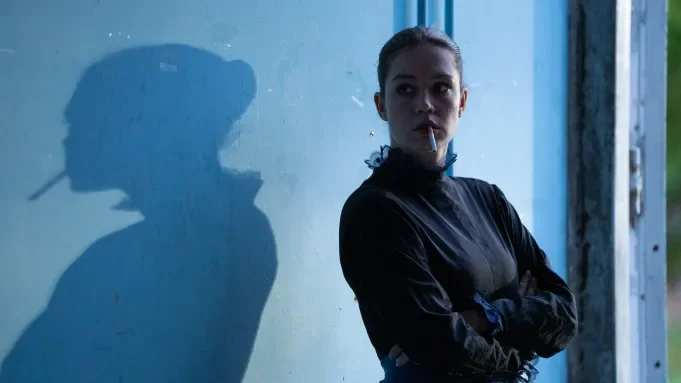
There are films that unsettle you, and then there are films that refuse to let you go. Garance, premiering at the 79th Cannes Film Festival, belongs firmly in the latter category — a raw, unrelenting portrait of addiction that strips its subject bare and dares the audience to look away. Most won't be able to. Not because it's exploitative, but because it is devastatingly, undeniably true.
At the center of this storm is Adèle Exarchopoulos, who delivers what may be the defining performance of her already remarkable career. As Garance—a woman in complete freefall, consumed by alcoholism—Exarchopoulos does not perform suffering. She inhabits it. Every glassy-eyed morning, every shaking hand reaching for a bottle that was supposed to be the last one, every moment of brittle bravado crumbling into quiet devastation — she lives inside all of it. There is no vanity here. There is no safety net. There is only a woman drowning in plain sight and an actress brave enough to drown alongside her character without ever reaching for shore.
What makes Garance so difficult—and so essential—is its refusal to romanticize addiction or offer the audience the comfort of a tidy arc. Hollywood has long been guilty of packaging substance abuse into redemption stories with clean third acts and cathartic resolutions. Garance has no interest in that transaction. Instead, the film moves through the brutal, cyclical reality of alcoholism: the denial that functions as armor, the defeat that follows every failed attempt at control, and the grinding psychological war that rages between the person someone once was and the disease that has commandeered them.
Garance cycles through these stages not in a linear march toward recovery, but in the chaotic, repetitive pattern that anyone who has watched someone they love struggle with addiction will recognize immediately. She lies to herself. She lies to the people around her. She is charming and then catastrophic, lucid and then completely lost. Exarchopoulos makes every contradiction feel earned and authentic. You understand how this woman functions—how she holds herself together just enough to keep people close until she can't anymore.
The film is an uncomfortable watch by design. Scenes linger past the point of comfort. The camera does not flinch during the ugliest moments—the morning-after wreckage, the humiliations both private and public, and the hollow victories of a single sober day followed by collapse. This is not a film that will leave you feeling pleased. It is a film that will leave you feeling something true.
Supporting performances add texture without stealing focus, wisely allowing Exarchopoulos the space to command every scene she occupies. The cinematography—muted, intimate, often uncomfortably close—reinforces the claustrophobia of addiction itself, that sensation of being trapped inside a life that is caving in around you. The score is used sparingly, trusting both the silence and the performance to carry weight.
Garance is not an easy film to recommend, and that is precisely why it must be seen. It does what the best cinema can do: it places you inside an experience you may never have lived and makes you understand it from the inside out. For audiences willing to sit with the discomfort, the reward is a film of profound honesty and genuine consequence.
Exarchopoulos doesn't just carry this film — she commands it. Garance announces itself as one of the most significant works to emerge from Cannes this year and one of the most honest films about addiction in recent memory.