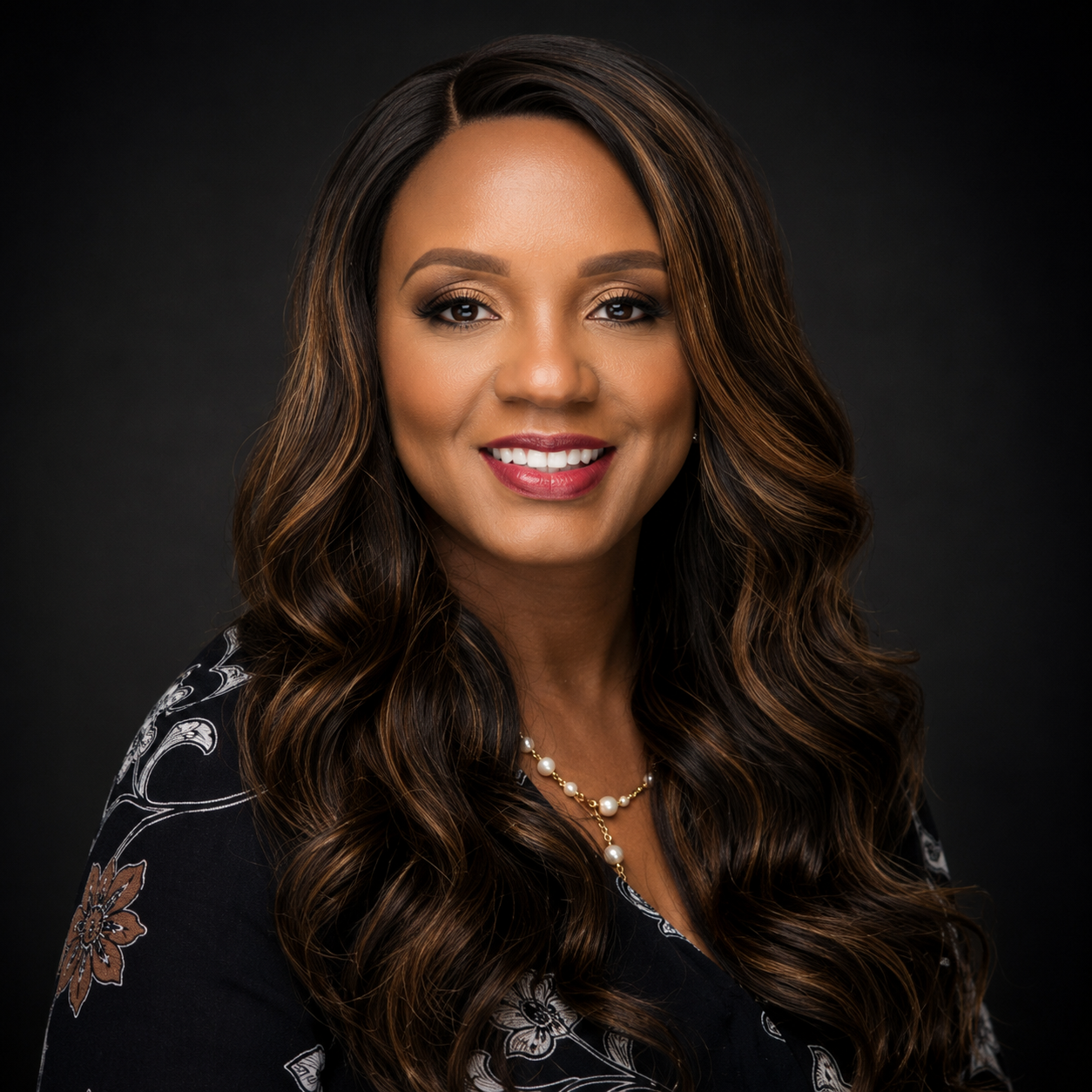
Regina King at ABFF: A Homecoming 30 Years in the Making
At the 30th anniversary of the American Black Film Festival, the Oscar winner came home — not just to Miami Beach, but to herself. Her legacy talk was the emotional heartbeat of the entire weekend.
There are festival appearances, and then there are festival moments. Regina King's Legacy Talk at the 30th American Black Film Festival was unambiguously the latter. On Day 2 of ABFF's "Homecoming" celebration — a theme that could not have been more perfectly cast — King returned to the stage of a festival she first graced in 1997, when it was still called the Acapulco Black Film Festival, and made clear that neither she nor this institution had arrived at this moment by accident.
Both have faced a long journey. Twenty-nine years ago, a young actress showed up to a film festival that few people in the industry were taking seriously, at a time when Black creative spaces were treated as niche rather than necessary. Now, she is an Academy Award winner, a four-time Emmy recipient, a director, a producer, and one of the most respected voices in the conversation about who gets to make what and for whom. ABFF, meanwhile, has grown from a gathering of dedicated believers into one of the most influential cultural institutions in American entertainment. That convergence—of a woman who became a force and a festival that became a movement—is exactly what made this Legacy Talk feel like something worth witnessing in person.
The Conversation
The day had already delivered considerable texture. It opened with the Official Filmmaker Breakfast at Mr. Chow, where King appeared alongside Lina Polimeni, SVP and Chief Marketing Officer at Eli Lilly, for a 45-minute conversation moderated by Stacy Smith of the USC Annenberg Inclusion Initiative. That discussion touched on the intersection of brand leadership, creative risk, and representation—a conversation that felt notably aligned with King's own career philosophy. She has never been someone who separates the business of storytelling from its human stakes.
Later in the day, King returned to the stage for the Legacy Talk—a fuller, more intimate conversation tracing the arc of her creative life. The discussion moved through the expected territory: the early television years, the breakthrough film work, the careful accumulation of credits that eventually produced something undeniable. But King is not a retrospective thinker in the nostalgic sense. What she brings to conversations like these is clarity — a precise understanding of how she has always moved, why she has made the choices she made, and what she understands about the industry that younger artists are still figuring out.
"ABFF has championed countless artists and storytellers, growing into a powerful global platform. What Jeff and Nicole Friday have built over 30 years has made a lasting impact across our industry. Returning feels like a homecoming—a celebration of our creativity, resilience, and excellence."
— Regina King, ABFF 2026
The Career That Built This Moment
It is worth pausing on what Regina King's résumé actually represents—not just as a list of credits, but as a deliberate construction. She started on 227, a sitcom that gave her the foundation of craft and timing. She built through films like Boyz n the Hood, Jerry Maguire, and Ray, always choosing work that required her to be fully present rather than decorative. She became a four-time Emmy winner through a sustained commitment to television drama—American Crime, Seven Seconds, and Watchmen—at a moment when the industry was finally beginning to understand what Black women could carry in a leading role. And then If Beale Street Could Talk, Barry Jenkins' ravishing adaptation of James Baldwin's novel, earned her the Academy Award for Best Supporting Actress in 2019, a win that felt less like a surprise than a reckoning with how long it had taken to get there.
She stepped into directing with One Night in Miami, an extraordinary debut feature that announced her behind the camera with the same authority she has always had in front of it. The film announced itself: this is a filmmaker. Not a celebrity trying directing on for size, but a storyteller who had spent decades learning exactly what she needed to know to make the work she wanted to make.
That evolution — from actress to Emmy machine to Oscar winner to director to producer to cultural institution — is not a story about luck. It is a story about intention. And at ABFF, with 30 years of institutional memory in the room, that intention was palpable.
Why This Festival, Why Now
The Homecoming Was Mutual
King's relationship with ABFF is not a branding arrangement or a convenient anniversary milestone. It is genuinely reciprocal. She has watched the festival grow into something that now attracts global attention, and the festival has watched her become the kind of artist its founding mission was designed to celebrate. ABFF was created to give Black storytellers a space where their work would be centered rather than marginalized—and King's entire career can be read as a parallel argument: that when Black artists are given the creative control and the institutional support to tell their own stories, the results are extraordinary.
This year's ABFF was not short on substance. The programming slate included documentary spotlights on Brittney Griner and Noah Lyles, a packed short film showcase hosted by Bevy Smith featuring emerging filmmakers competing for HBO's prestigious award and prize money, panels on vertical microdramas, comedy, wellness, and the shifting landscape of Black representation in streaming. Dawn Staley brought the afternoon its electricity — a conversation about legacy as something you build with discipline, not claim with rhetoric. The opening night premiere of Peacock's Strung, Malcolm D. Lee's psychological thriller starring Chloe Bailey, Lynn Whitfield, Lucien Laviscount, Anna Diop, and Coco Jones, signaled that ABFF is still a place where Black genre filmmaking gets taken seriously.
But through all of it, King functioned as the weekend's emotional anchor. Her presence — her poise, her directness, and her refusal to be small — established the tone. She is someone who has earned the right to speak plainly about this industry, and she does.
"Black girls deserve to see themselves in worlds of wonder, power, and imagination."
— Regina King
What Legacy Actually Looks Like
The word "legacy" gets deployed carelessly in entertainment journalism. We call artists "legends" before their best work is even behind them. We flatten complicated careers into highlight reels. What ABFF's Legacy Talk format does well—when the subject is right—is resist that flattening. King's conversation was about the full arc, including the parts that required patience, strategic silence, and the kind of discernment that doesn't read as glamorous but is absolutely essential to longevity.
She came up in an industry that did not always know what to do with her. She became one of its most indispensable figures anyway. She has used that position to champion stories and artists that the industry might otherwise overlook. Now she is set to appear in Children of Blood and Bone, Gina Prince-Bythewood's sweeping Afrofantasy epic — a film that feels, in some ways, like the culmination of everything King said on that ABFF stage: Black girls deserve to see themselves in worlds of wonder. She is going to make sure they do.
Thirty years ago, ABFF began with a belief that Black creative excellence existed in abundance and simply needed a room large enough to hold it. Regina King has spent her entire career proving that belief correct. Watching her at this milestone anniversary felt less like a celebration and more like a confirmation—of everything this festival was built to say and everything she has spent three decades proving true.
The event was a homecoming. And it landed exactly the way those things do when they're real.